
As countries begin implementing the World Health Organization's new global strategy for Emergency, Critical and Operative (ECO) care, an international group of researchers is calling for Essential Emergency and Critical Care (EECC) to be prioritised as the foundation of stronger, more equitable health systems.
The new paper, published in the Journal of Health, Population and Nutrition, is authored by Tim Baker, Carl Otto Schell, Pauline Convocar, Fitsum Kifle, Niranjan Kissoon, Nobhojit Roy and Karima Khalid, representing institutions across Africa, Asia, Europe and North America.
The authors highlight a critical challenge facing policymakers: how to strengthen ECO services while ensuring that limited resources deliver the greatest possible benefit.
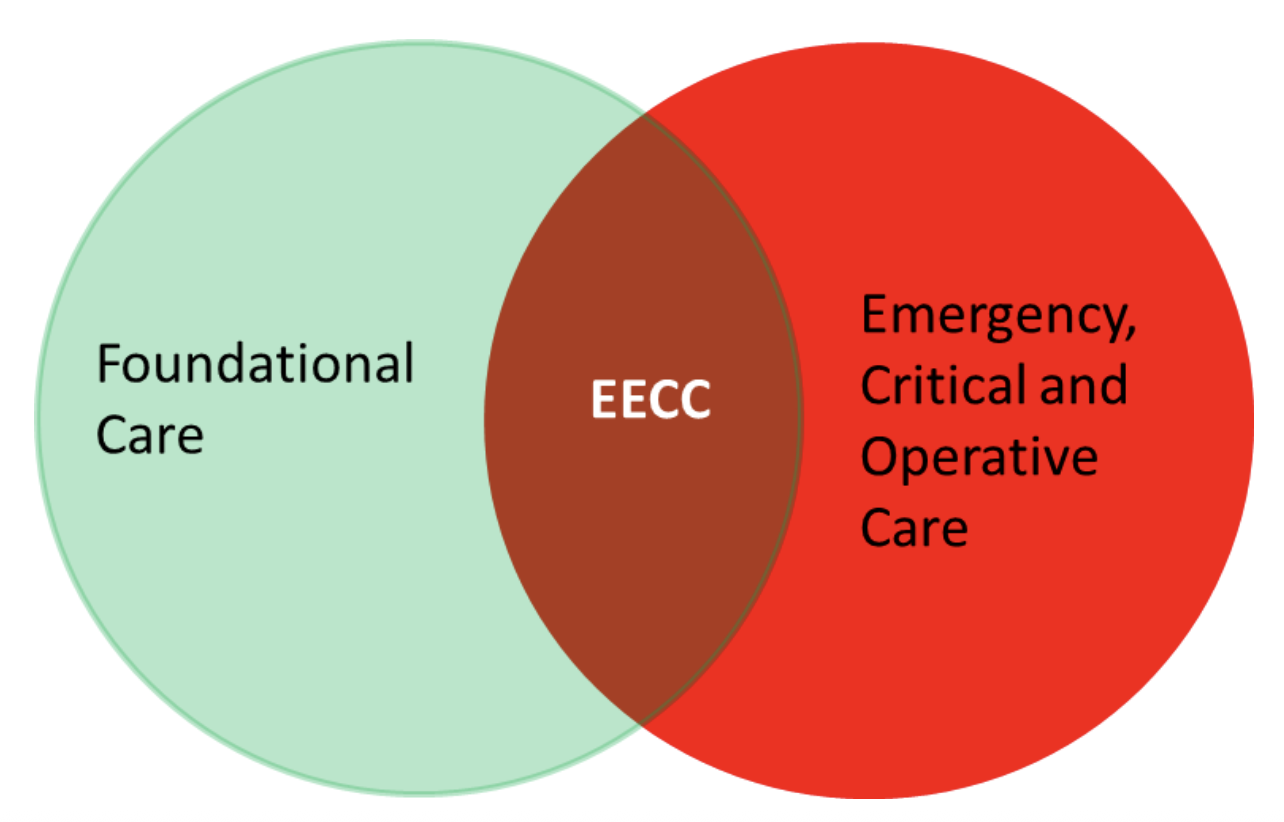
ECO encompasses everything from basic emergency treatment and resuscitation to advanced intensive care and specialised surgery. While all are important, the researchers warn that investing disproportionately in advanced services risks leaving foundational care underdeveloped, particularly in resource-limited settings.
Instead, they argue that health systems should first ensure universal access to essential interventions such as early recognition of critical illness, vital signs monitoring, oxygen therapy, basic airway support, essential medications and timely referral.
EECC provides a practical, highly cost-effective minimum standard for delivering this care to critically ill patients throughout the hospital, including those undergoing surgery.
From evidence to policy
The publication builds on growing international recognition of EECC's role within ECO.
Earlier this year, EECC Global highlighted why EECC should form the foundation of ECO care, ahead of the World Health Assembly's adoption of the global ECO strategy in May.
More recently, Ethiopia's Ministry of Health endorsed the Addis Ababa Declaration, which explicitly calls for EECC to be scaled as a minimum standard for life-saving clinical care across Africa.
Together, these developments reinforce an important message for governments and health system leaders: strengthening ECO care is not simply about expanding specialist services. It is about ensuring that every patient, in every hospital, can access the essential care needed to survive critical illness.
As countries translate the global ECO strategy into national plans, prioritising foundational care offers a practical route towards greater equity, stronger health systems and improved survival.