
Why EECC Should Be the Foundation of ECO
In May 2026, Member States at the World Health Assembly are expected to adopt the WHO’s global strategy and action plan for Emergency, Critical and Operative (ECO) care. This is an important moment for global health. For the first time, emergency care, critical care, and operative care are being brought together into a single, integrated systems agenda.
The ambition is right. The need is urgent.
Emergency conditions account for more than half of global deaths, millions of critically ill patients never receive basic life-saving care, and billions of people still lack access to safe surgery and oxygen therapy.
But as countries move from strategy to implementation, a crucial question must guide decision-making: where should investment begin?
The answer is that Essential Emergency and Critical Care (EECC) should form the foundation of ECO systems worldwide.
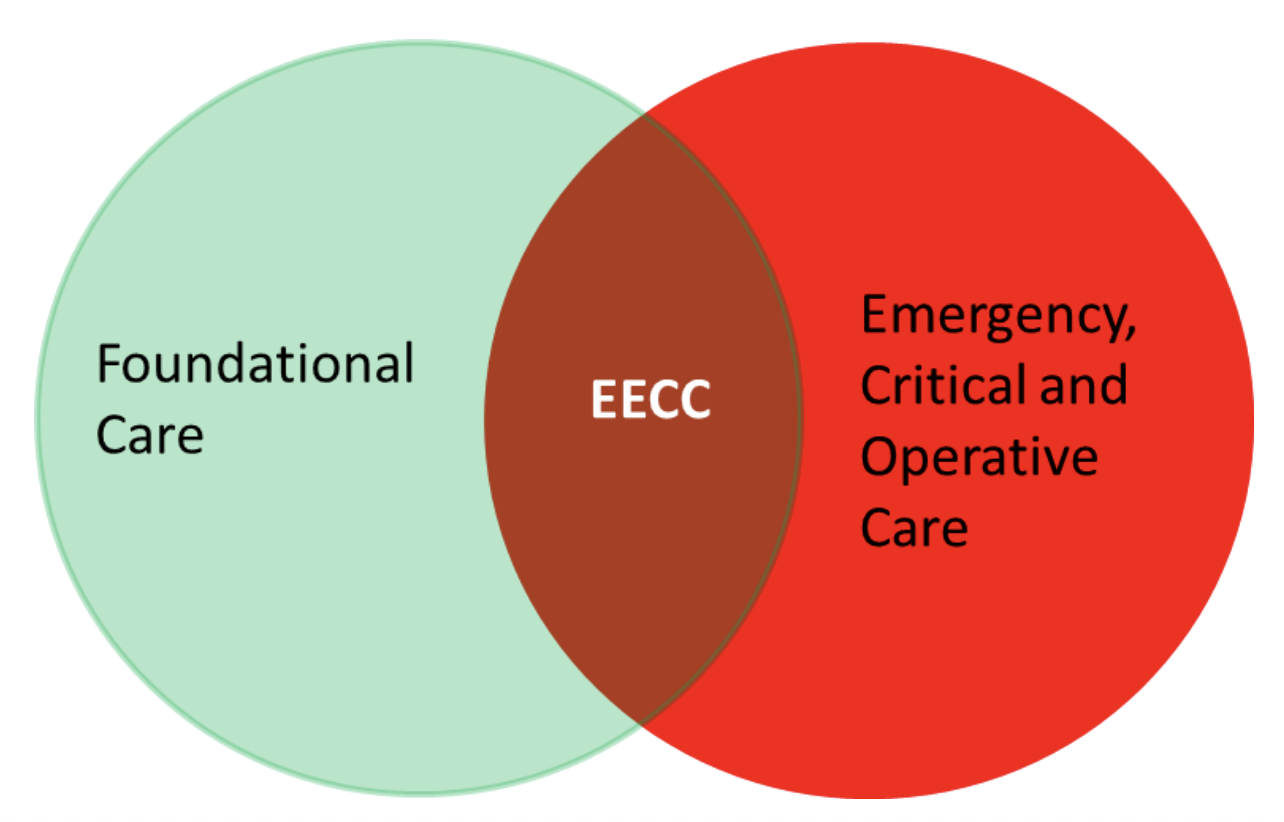
Foundational ECO care: Essential Emergency and Critical Care
The reasoning is straightforward. Before health systems can deliver advanced intensive care or highly specialised surgery, they must first ensure that every patient receives the most basic, most effective, and most universally needed care.
That means reliably recognising critical illness early. Monitoring vital signs. Providing oxygen therapy. Giving intravenous fluids and essential medications. Supporting the airway. Preventing infection. Escalating care when needed.
These are not high-cost interventions. They are the fundamentals of safe healthcare.
They are also the interventions most likely to deliver equitable, population-level impact.
The risk for ECO implementation is not lack of ambition, but imbalance. In many settings, pressure naturally gravitates toward visible, high-technology services that benefit relatively few patients. Meanwhile, foundational care across general wards, district hospitals, emergency units, maternity services, and perioperative care remains inconsistent or absent.
EECC provides a practical way to avoid this gap.
As a defined minimum standard for the care of critically ill patients, EECC focuses on the clinical processes and hospital readiness required to deliver foundational care everywhere, for everyone. Several countries are already integrating EECC into national systems, and the approach has been shown to be highly cost-effective, with estimates of around $14 per DALY averted.
For policymakers and global health leaders gathering in Geneva, the message is clear: ECO systems will only succeed if they are built on a strong, equitable foundation.
EECC is that foundation.