
How We Implement EECC
From Evidence to Action
EECC Global works with governments, hospitals and health workers to improve care for critically ill patients through a practical, evidence-based implementation approach.
By combining training, leadership, tools, measurement, policy integration and local ownership, we help health systems strengthen the identification, treatment and monitoring of critically ill patients.
Our approach follows six stages: Understand • Engage • Implement • Learn • Sustain • Scale
A. Understanding the Context
Every health system faces different challenges in delivering care for critically ill patients. Before implementing EECC, we work with local partners to understand existing services, resources, workflows and barriers to care.
This may include health facility assessments, reviews of local evidence, and discussions with health workers, hospital leaders, policymakers and other stakeholders. These insights help identify priorities and shape implementation plans that are relevant to the local context.
B. Building Partnerships and Local Ownership
Sustainable improvements in care require local leadership and collaboration. We work closely with governments, hospitals, professional societies, universities, patient groups and international partners to build support for EECC and identify opportunities for collaboration.
By engaging stakeholders from the outset, we help ensure that EECC is locally owned, aligned with national priorities and positioned for long-term success.
C. The EECC Implementation Package
Assess Readiness
Understand current services, resources, workflows and barriers to EECC provision.
Introduce Practical Tools
Introduce protocols, checklists and decision-support tools that promote EECC provision.
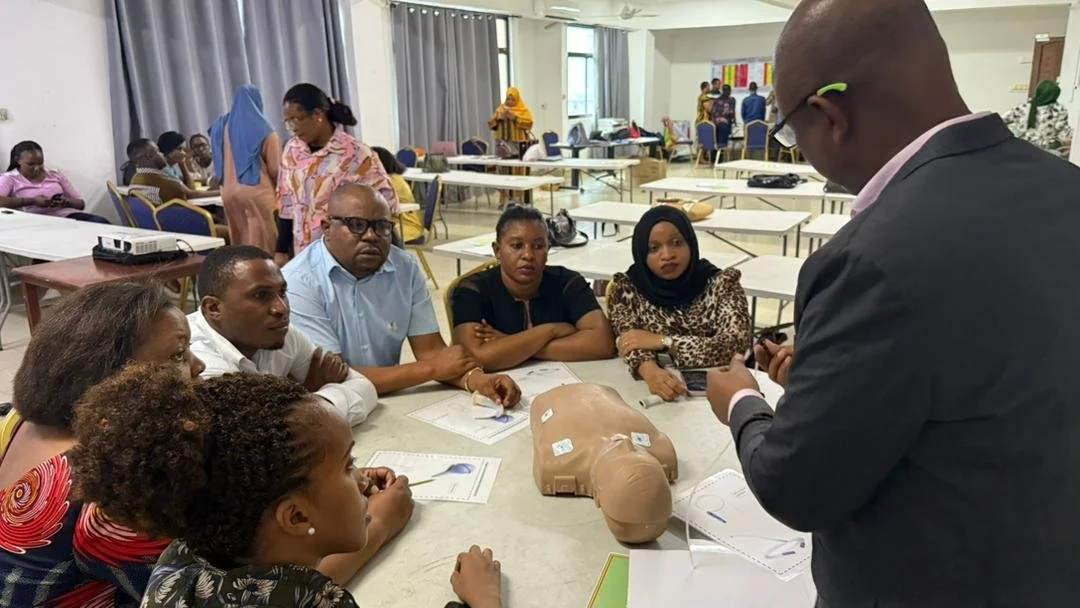
Train Health Workers
Build the knowledge and skills needed to identify and care for critically ill patients.

Use Local Knowledge
Identify, share and scale practical solutions developed by frontline health workers.

Strengthen Leadership
Support leaders & managers to drive implementation and improve quality of care.
Essential Resources
Improve the availability and readiness of equipment and infrastructure for EECC.
Designate Focal Persons
Designate local champions to coordinate activities and sustain progress.

Monitor, Evaluate, Learn
Track EECC provision and patient outcomes to support continuous improvement.
D. Learning and Improving
Health systems are constantly evolving, and so is EECC implementation. We support ongoing measurement, mentorship and knowledge sharing to understand what is working, identify challenges and improve the quality of care over time.
This may include monitoring EECC provision, tracking patient outcomes, implementation research, refresher training and opportunities for health workers and leaders to learn from one another.
E. Sustaining Change
Implementation does not end when training is complete. We support ongoing measurement, mentorship and knowledge sharing to understand what is working, identify challenges and improve the quality of care over time.
By developing local leadership, supporting EECC focal persons and embedding EECC into routine practice, health systems are better positioned to sustain improvements long after the initial implementation phase.
F. Scaling impact
Successful implementation creates the foundation for wider adoption. Working with governments and partners, we support the integration of EECC into national policies, guidelines, training programmes and health information systems.
As EECC becomes embedded within health systems, improvements can be expanded to additional facilities and reach increasing numbers of critically ill patients.
G. Results
The goal of EECC implementation is simple: improve the identification, treatment and monitoring of critically ill patients so that more lives are saved.
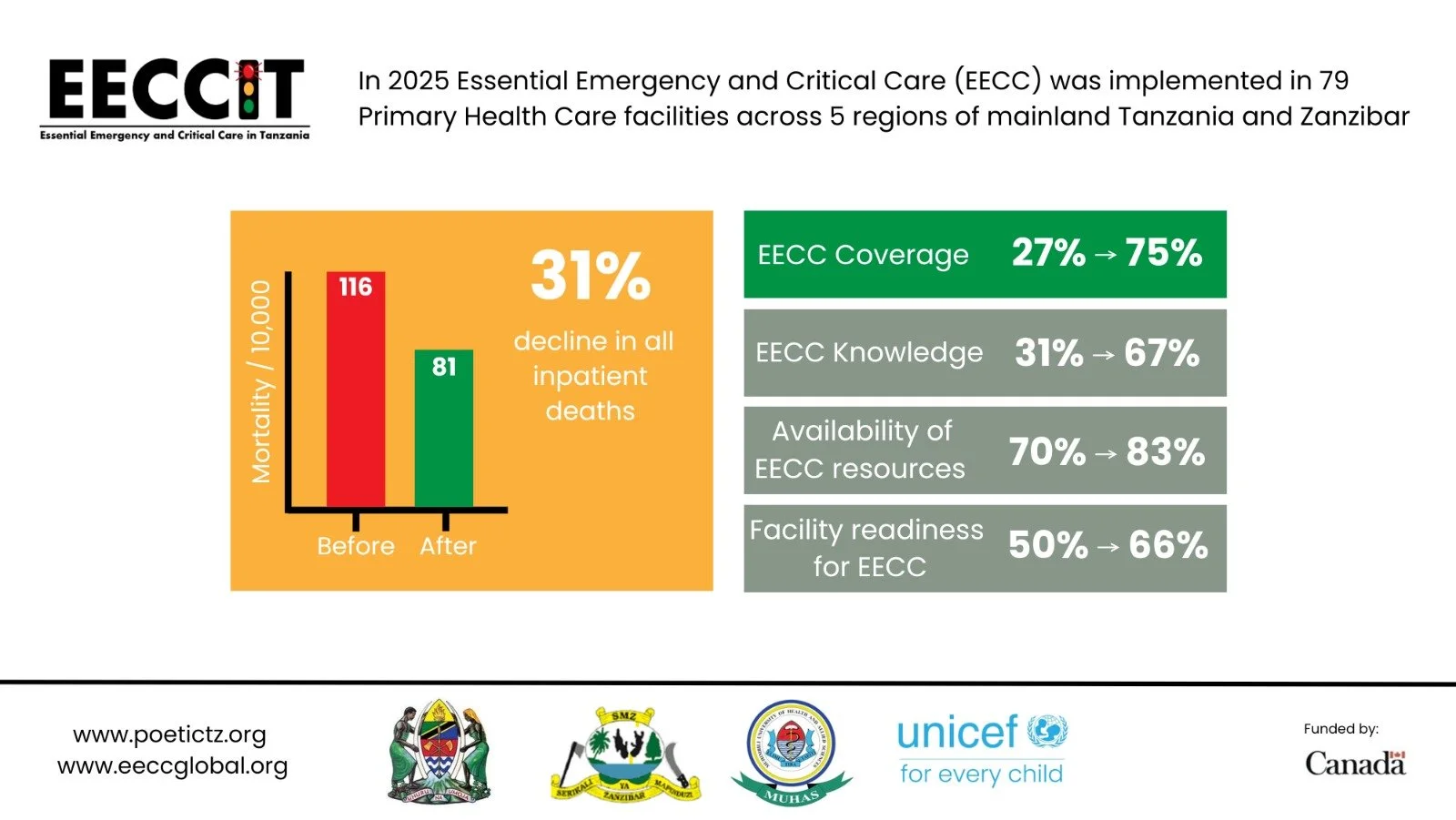
In Tanzania, implementation across 79 hospitals was associated with a 31% reduction in inpatient mortality, alongside improvements in EECC coverage, health worker knowledge, resource availability and facility readiness.
See EECC in action through real patient stories.