Why local leadership is the future of EECC in the Democratic Republic of Congo
By Dr Rodrigo López Barreda
Anaesthesiologist, humanitarian physician and EECC Ambassador
Over the years, I've had the privilege of working alongside healthcare teams in countries including Chad, Somaliland, Sudan and the Democratic Republic of the Congo. One lesson has become increasingly clear to me: sustainable improvements in healthcare are rarely driven by visiting experts. They happen when local healthcare professionals become the teachers, advocates and leaders of change within their own health systems.
That is why I was so encouraged to follow the recent EECC implementation activities in Tanganyika Province, Democratic Republic of Congo, and to hear about them afterwards from William Baraka, who led the programme on the ground.
From 14th –19th August, healthcare professionals from Kalemie General Referral Hospital, Undugu Hospital and Shalom Hospital took part in the first phase of EECC implementation in the province. Led by William Baraka, the programme combined a Hospital Readiness Assessment with both an Essential Emergency and Critical Care (EECC) Provider Training course and a Training of Trainers programme.
What struck me most from William's reflections afterwards was not simply that the training had been delivered, but the enthusiasm, commitment and leadership shown by the participants. They were thinking beyond their own practice and considering how they could help others improve the care of critically ill patients.
That is the real purpose of a Training of Trainers programme.
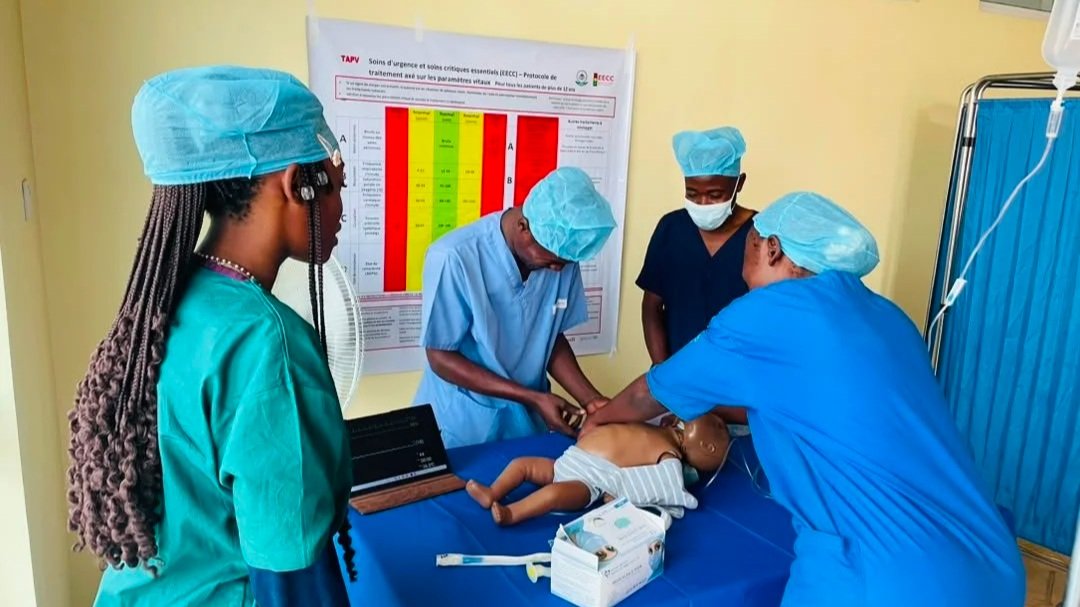
Participants taking part in a simulation
Success is not measured by how many people attend a course. It is measured by what happens afterwards, when those participants return to their hospitals, teach their colleagues, solve problems together and continue improving the care of critically ill patients long after the visiting faculty have left.
Perhaps the most encouraging part of the week was seeing future EECC leaders emerge. Throughout the training, participants demonstrated not only technical competence but also the teamwork, leadership and commitment needed to help drive EECC forward in their own hospitals. Strengthening the DRC EECC Hub in this way is essential if EECC is to continue growing through local ownership rather than external support.
This approach reflects what I believe humanitarian partnerships should strive for. The goal is not to deliver training and leave. It is to support local colleagues in building the knowledge, confidence and networks needed to lead change themselves.
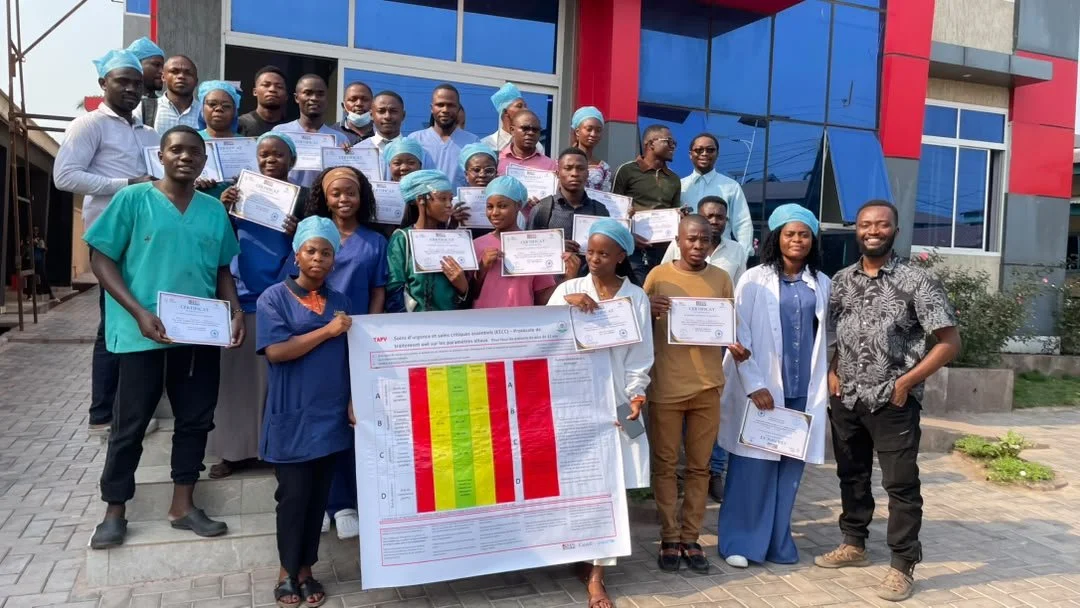
Successful course participants
William Baraka's leadership was central to making this first phase of implementation a success. Working closely with local hospitals and partners, he helped create the conditions for EECC to take root through local ownership rather than external direction. I am also grateful to Global SPOOA-PM AFRICA and SMART VISION CONSULTING for their support with training equipment and simulation resources, and, most importantly, the healthcare professionals who dedicated their time and energy throughout the week.
The activities in Tanganyika were not simply the delivery of another training programme. They represented another step towards building a stronger network of local EECC leaders. Thanks to the commitment of people like William Baraka and the healthcare professionals he worked alongside, that network will continue to grow long after the training itself has finished.