
From Training to Transformation: Building the Next Generation of EECC Trainers in Tanzania
On 14th March in Dar es Salaam, a single day of training focused on a simple but potent idea: if we want Essential Emergency and Critical Care (EECC) to reach every patient who needs it, we must equip clinicians not just to deliver care, but to teach it.
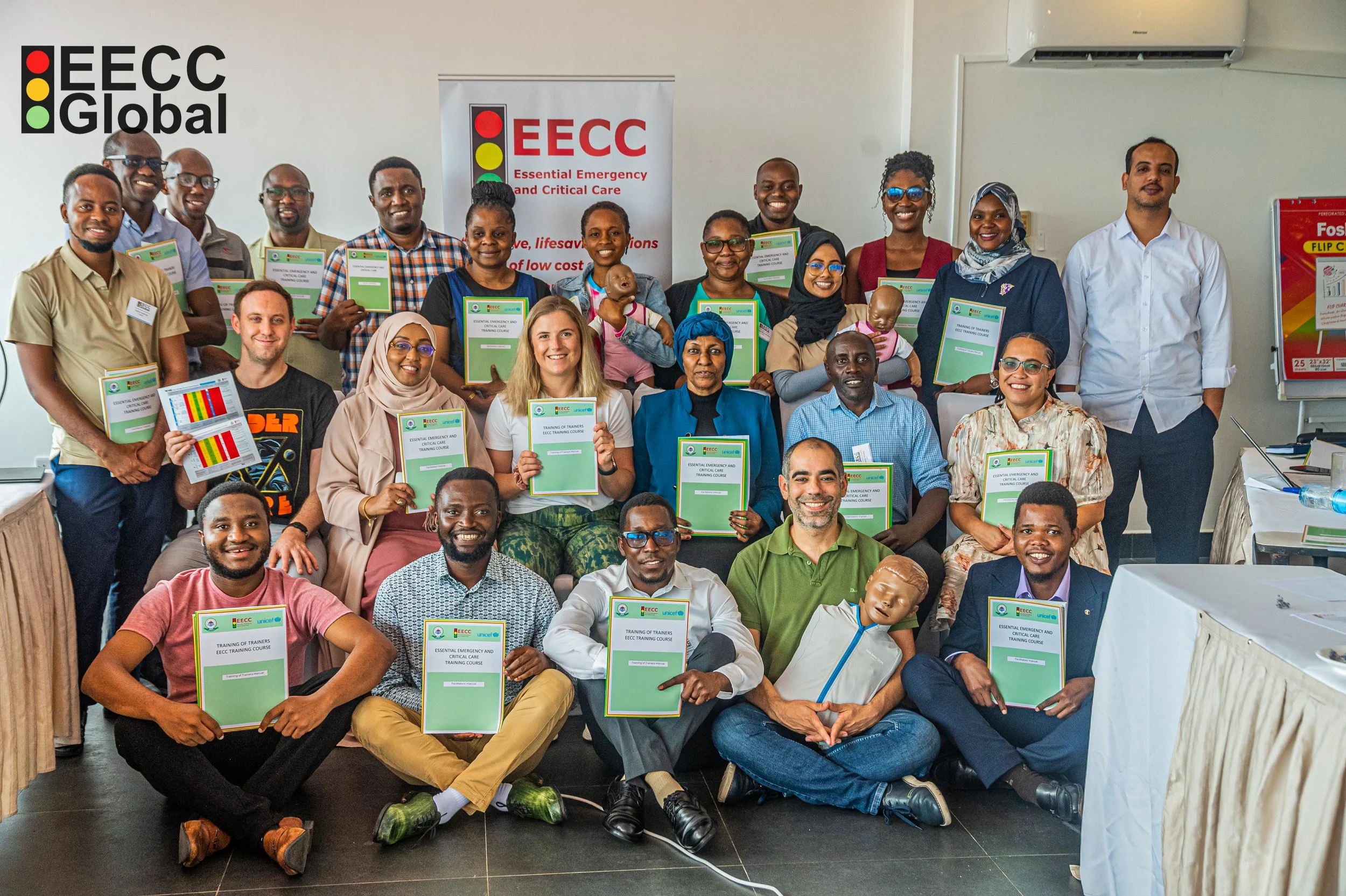
Following the 5th EECC Champions Workshop, 22 healthcare professionals from 10 countries came together for a global Training of Trainers (ToT) course. Their mission was clear: to return to their hospitals and countries ready to train others, accelerating the spread of life-saving care.
Learning how to teach what matters most
The EECC training course itself focuses on the basics that save lives: early recognition of critical illness, oxygen therapy, fluids, airway management, and consistent monitoring. But scaling this requires more than clinical knowledge. It requires confident, capable educators.
The ToT course is designed with this in mind. As outlined in the training manual, it focuses on practical teaching methods: how to deliver clear lectures, run skills stations, and facilitate simulations in a way that builds confidence and competence among learners .
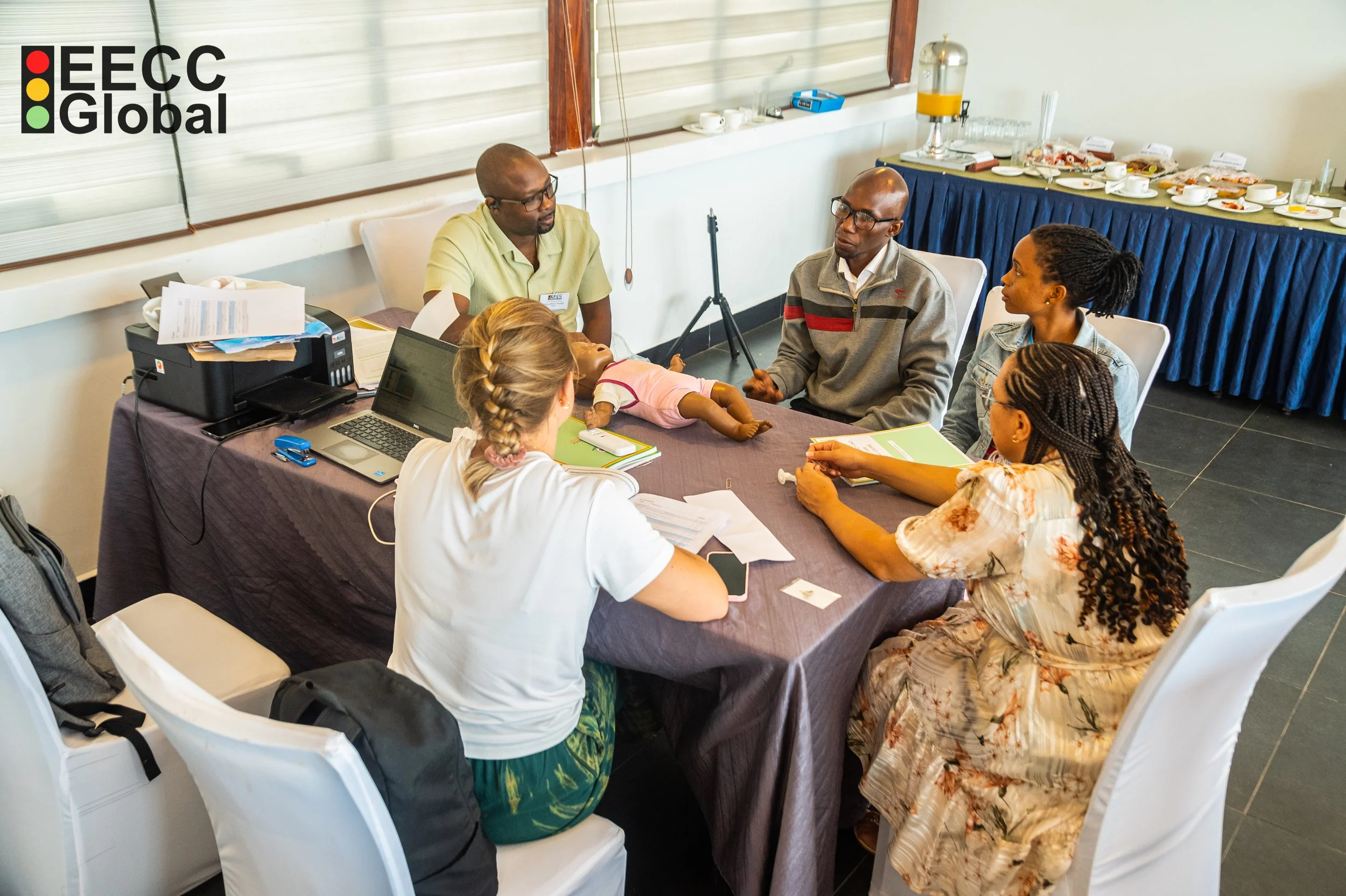
In Dar es Salaam, the day was deliberately hands-on. Participants did not just observe teaching, they practised it. Through small group sessions, they rotated between delivering short lectures, teaching clinical skills, and leading simulated emergency scenarios. This mirrors the structure of the EECC course itself, which blends listening, discussion, and practical application to suit different learning styles .
A global group, a shared purpose
The group reflected the growing global reach of EECC. Participants travelled from Mauritania, Ghana, Kenya, Uganda, Rwanda, Democratic Republic of Congo, Zambia, Namibia, and Sudan, alongside colleagues from Tanzania.
Despite the diversity of settings, the challenges they face are strikingly similar: critically ill patients are often cared for in general wards, and essential interventions are not consistently delivered. The ToT created a shared space to address this, building not only skills, but a network of trainers committed to change.
A shift in perspective
For many participants, the impact went beyond teaching techniques.
Dennis Nyangau, one of the participants, described the experience as “more than a training, it was a shift in perspective.” His key takeaway was simple but fundamental: “critical care begins with awareness and consistency, not complexity.”
This reflects a core principle of EECC. Improving outcomes does not depend on advanced technology or ICU expansion alone. It depends on getting the basics right, every time, for every patient.
From one day to lasting impact
The strength of the ToT model lies in its multiplier effect. Each of the 22 participants is now equipped to deliver EECC training in their own setting, whether in district hospitals, referral centres, or national programmes.
The manual emphasises that teaching skills improve with practice and should be used regularly, ideally through ongoing training and refresher courses . This is how EECC becomes embedded: not as a one-off intervention, but as a sustained shift in how care is delivered.
As these new trainers return home, they carry more than a certificate. They carry the ability to build capacity, strengthen systems, and ensure that critically ill patients are recognised and treated in time.
Because ultimately, scaling EECC is not about a single course in one city. It is about creating a global community of clinicians who can teach, lead, and deliver essential care, so that no patient dies for lack of simple, life-saving interventions.