
By Elibariki Mkumbo, CRISP Coordinator, POETIC Tanzania
During a recent CRISP meeting, we heard from a survivor of critical illness whose oxygen supply had run out while he was in hospital. Because of his injuries, he couldn't call for help. He had to wait until someone passing his bed noticed he was struggling to breathe.
His experience has really stayed with me. It shows why providing oxygen is only part of the job. Someone also needs to make sure it's still flowing, and that the patient is responding to treatment.
Other members spoke about trying to get information about relatives who were critically ill. They described the uncertainty of not knowing what was happening, and how difficult it could be to get answers from busy healthcare workers.
When members listened to each other's stories, they began to realise that they weren't alone in what they'd gone through. People became more comfortable sharing their own experiences. There was also a feeling that, by taking part in CRISP, they could speak for other patients and families who had faced similar problems.
These are some of the experiences being shared through CRISP (Critical Illness Survivors, Patients and Relatives), a group of patients, survivors and family caregivers in Tanzania who are helping us improve Essential Emergency and Critical Care (EECC).
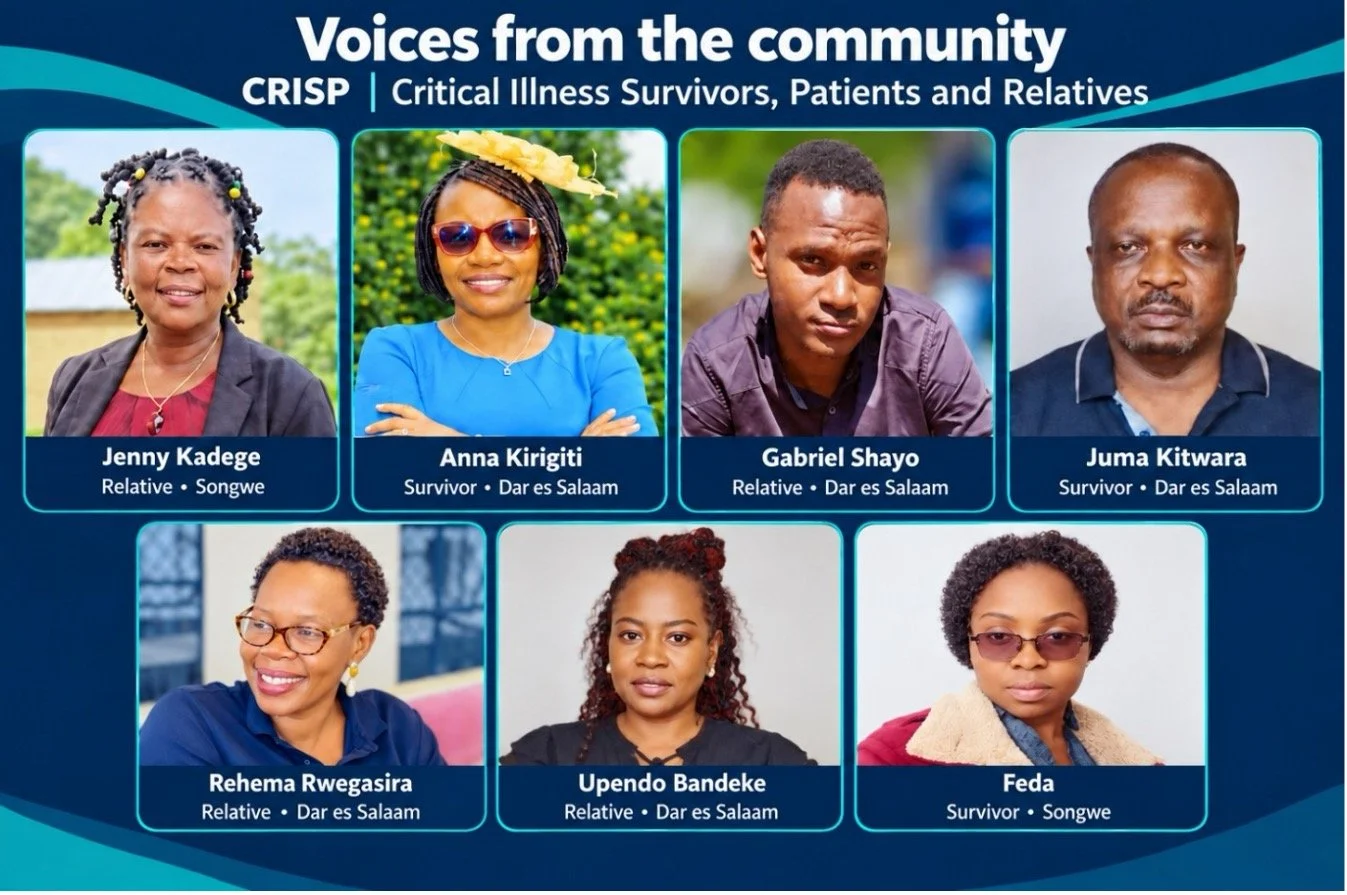
CRISP participants
Putting these experiences to use
We've been discussing how CRISP members can become more involved in our research and training, and have identified some practical opportunities.
One is to ask members to review the information we give people taking part in research. Are our explanations clear? Do consent forms answer the questions people actually have? We also want their help making research findings understandable to patients and the wider community.
Another area is training. We're planning to record more video testimonies and use them in EECC workshops. Hearing someone describe what happened when their oxygen ran out, or when their concerns weren't taken seriously, could help healthcare workers reflect on their own practice.
We're also looking at how individual experiences might inform future studies. One grandmother described repeatedly seeking help for her critically ill grandson before he finally received treatment. Her story is particularly relevant as we prepare research into the recognition and care of critically ill children in hospitals.
What happens next?
We plan to continue meeting monthly and help CRISP members develop their knowledge and confidence in research, advocacy and sharing their stories. We'd also like to see members participating in conferences and other opportunities to raise