By Dr Rodrigo López Barreda
Anaesthesiologist, humanitarian physician and EECC Ambassador
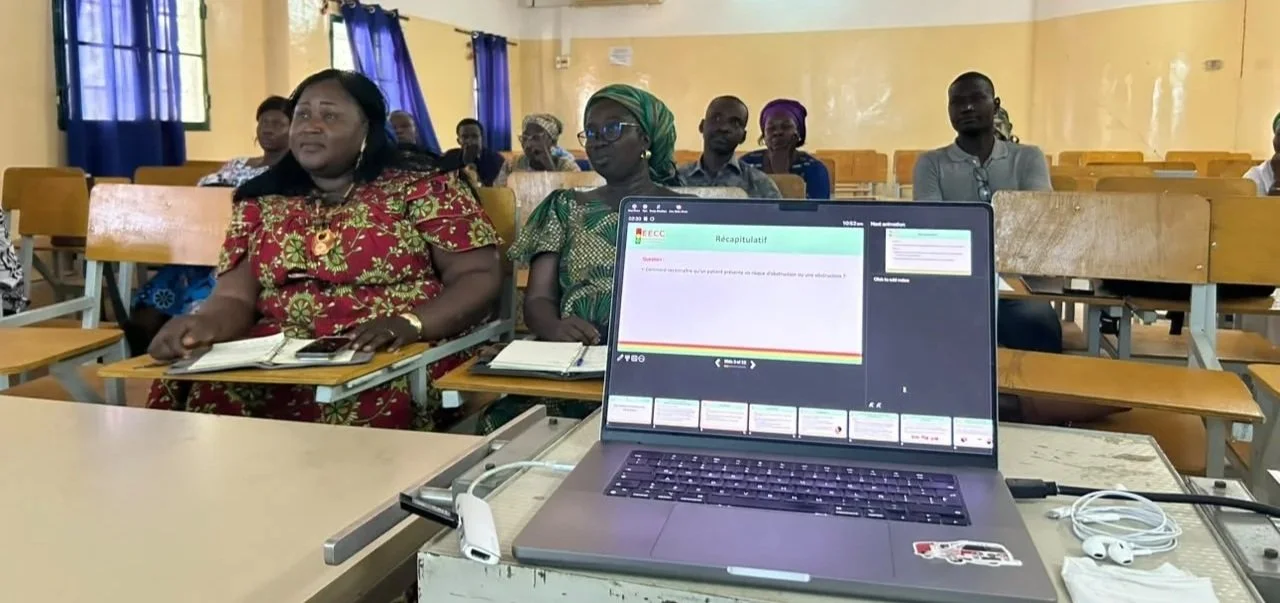
I recently delivered an Essential Emergency and Critical Care (EECC) course in Chad for 20 healthcare professionals from the Good Samaritan University Hospital and the Chadian Society of Analgesia, Anaesthesia, Critical Care and Emergency Medicine. Most were encountering EECC for the first time.
The participants were very committed and actively involved in the workshop and practical sessions. The most interesting discussion (and a first for me) came during the final session, when we talked about implementing EECC in their hospitals.
We started with the barriers you might expect: shortages of equipment, limited resources and gaps in clinical knowledge. And then one participant suggested that patients sometimes didn't receive essential care because of negligence.
Since we were speaking French, I wondered whether she meant ignorance, which sounds quite similar. She corrected me and said she really did mean negligence. Healthcare workers sometimes knew what they should do but didn't do it.
I asked why she thought this happened, and the conversation moved in a direction I was not expecting.
I mentioned a traditional belief I'd heard about in parts of Chad, where people avoid saying they are well because they fear attracting the jealousy of spirits and bringing misfortune upon themselves. The participants laughed initially, but one then said that the example made sense to him. He described a feeling among some healthcare workers that they couldn't really influence their patients' health; even when they knew certain interventions could be effective, they didn’t believe they could make a difference for them..
I found this interesting because we tend to approach implementation by identifying what healthcare workers need: more knowledge, better equipment, clearer guidelines or improved systems. All of these are important, but they don't necessarily explain why someone who knows what to do might still not act.
I'm not suggesting this conversation tells us something about healthcare workers across Chad. However, it made me think about how much we understand the attitudes and expectations that influence clinical practice, and whether we pay enough attention to them when introducing EECC.
There was also a practical outcome from the course. Representatives of the two participating organisations discussed how they could work together, and agreed to arrange visits for staff from the Good Samaritan University Hospital to see how other hospitals are applying EECC principles.
They hope to organise these visits around April, before another medical mission planned for June. It will be interesting to see whether observing how colleagues work in different settings helps participants identify changes they could make in their own hospitals.
For me, that is one of the questions I will follow up after this course: not only whether participants understand EECC, but what helps them put it into practice.