
The Fine Art of Clinical Trials Workshop was held in Africa for the first time in October. 30 participants from 14 countries took part in the workshop in Dar es Salaam, Tanzania. The focus was on developing clinical trial leadership and making global acute and critical care research more relevant to African healthcare settings.
Key questions addressed included where critical care research should take place, and which patients it should aim to benefit.
Developed by the Australian and New Zealand Intensive Care Research Centre (ANZIC-RC) at Monash University, the course has been running for more than a decade. It teaches practical skills in designing and leading clinical research that are rarely covered in formal academic training.
Looking beyond intensive care
Clinical trials in critical care have traditionally focused heavily on intensive care units. Yet research such as ACIOS and the Hospital Burden of Critical Illness across Global Settings Study have shown that most critically ill hospital patients are treated in general wards where essential treatments are not always available.
Aneth Kaliza, one of the workshop organisers, explained:
"We need to think beyond research conducted in intensive care units and ask which interventions could improve outcomes for all critically ill patients. From the outset, researchers should consider whether an intervention can realistically be implemented and sustained throughout hospitals."
For maximum population health impact, critical care research should prioritize the interventions included in Essential Emergency and Critical Care (EECC) – the basic, lifesaving care needed by all critically ill patients. This would ensure the research findings can be implemented at scale and keeps the focus on equitable care for all.
Developing African research leadership
The idea of holding the workshop in Africa came from a conversation between EECC Global's Tim Baker and Karima Khalid, and Steve Webb and Lisa Higgins, the workshop’s pioneers, at a clinical research conference in Kigali in 2025.
The three-day programme began with an interactive global critical care and EECC workshop, followed by sessions covering trial design, funding, research networks, trial governance and publishing findings.
Supporting African scientists to lead clinical research is a key element in building the evidence needed to improve critical care in Africa. Tanzania's government-led EECC implementation programme, which reported 31% fewer inpatient deaths, has already demonstrated the potential of improving essential care across hospitals. Further research is needed to understand how such improvements can be delivered and sustained in different settings.
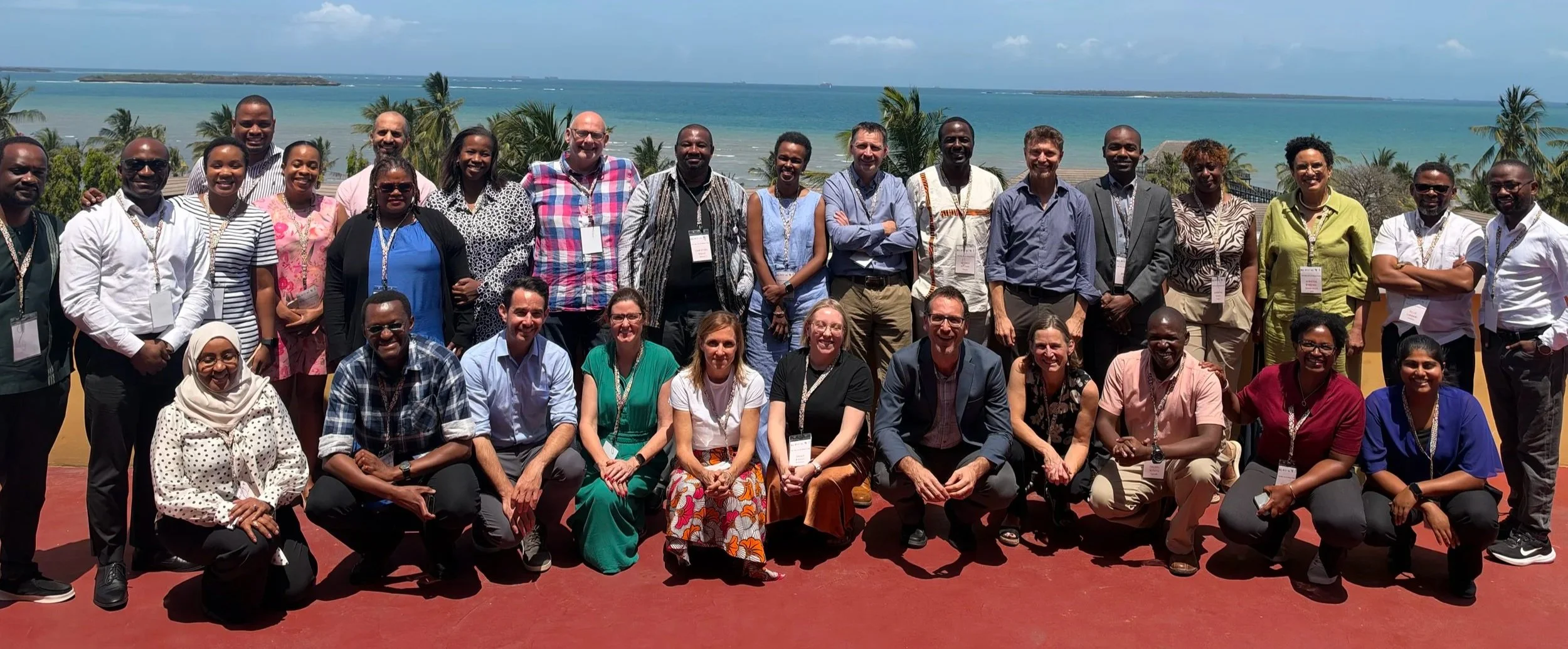
Participants in The Fine Art of Clinical Trials Workshop
The course was organised by ANZIC-RC, the African Acute Care Trials Network (AACUTNet), EECC Global, and Muhimbili University of Health and Allied Sciences (MUHAS), with sponsorship from Fisher & Paykel Healthcare.