
By Dr Gilles Eloi Rwibuka
Founder & Chair, EECC Burundi Hub
Teaching critical care in a classroom is one thing. Helping a nurse care for a critically ill patient when there's one functioning blood pressure cuff shared between three wards, limited oxygen and dozens of patients to look after is quite another.
These are some of the realities our seven respiratory nurse mentors are encountering as they introduce Essential Emergency and Critical Care (EECC) across hospitals in Burundi.
We originally planned more conventional teaching sessions, but finding classroom space and taking nurses away from already understaffed wards proved difficult. Instead, our mentors began working directly alongside healthcare professionals during their shifts.
In Kirundi, our mentors call this gutera inkuru: learning through conversation while working together.
I've come to appreciate how effective this can be. A few minutes spent demonstrating how to position a patient, clear an airway or manage a limited oxygen supply can be more useful than an hour of slides, because the learning happens in the circumstances where it will actually be applied.
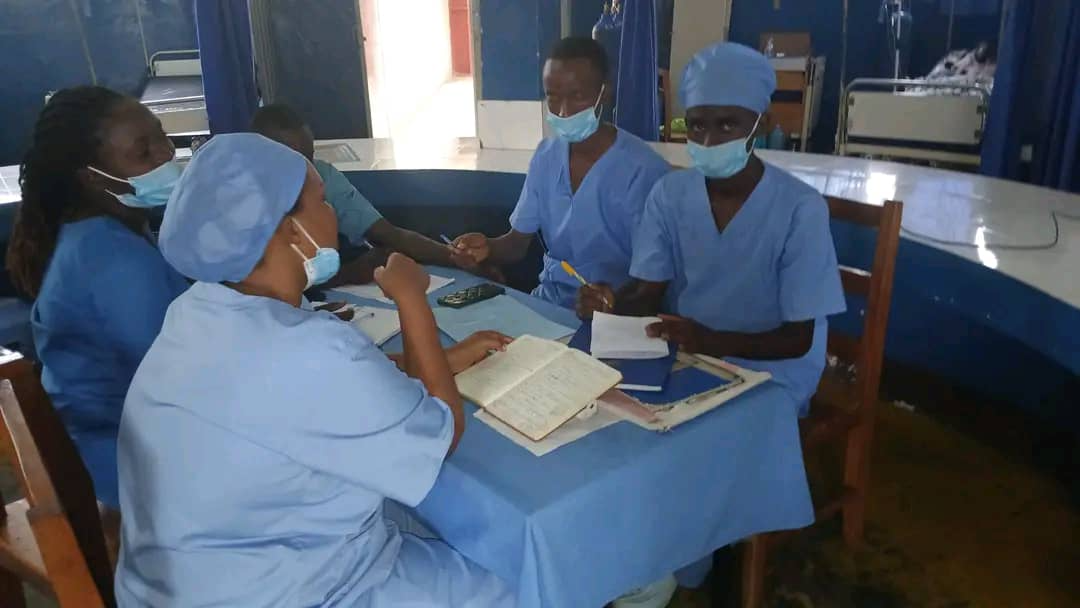
Nurse Mentor and Mentees in Hôpital Prince Régent Charles, Burundi
One example comes from Yvonne Kanani, one of our mentors at Clinique Prince Louis Rwagasore. A patient recovering from surgery had become unusually quiet, was breathing poorly and was showing signs of inadequate oxygenation. Yvonne was standing beside a ward nurse and began talking through what they were observing.
Together, they checked the patient's vital signs and recognised respiratory depression. Yvonne helped the nurse apply basic airway manoeuvres, position the patient safely, clear secretions and provide oxygen from the available supply. The patient stabilised within minutes.
Afterwards, the nurse told Yvonne that she had assumed sophisticated ICU equipment would be needed to make a difference. She hadn't realised how much could be achieved through basic airway management and positioning.
The mentors initially faced some uncertainty about their role. Some nurses worried they were there to assess their performance, while others thought they had come to help cover shifts.
Working alongside ward teams has helped overcome those concerns. Nurses have begun to see the mentors as colleagues who can support them with difficult patients, rather than people arriving to inspect or lecture them.
Hospital leaders have responded too. Several have asked the mentors to introduce EECC during staff meetings and contribute to the clinical orientation of medical interns.
We are still learning how best to make this approach work across seven different facilities, and we are beginning to collect data to assess its impact.
But the experience so far has reinforced something important for me: teaching essential critical care doesn't always require taking healthcare workers away from their patients. Sometimes the most useful place to learn is right beside them.