
By Dr Gaudencia Dausab
EECC Namibia National Hub Leader
Namibia's healthcare system has seen significant investment in recent years, with efforts to improve equity and access through facility renovations, new equipment and the recruitment of healthcare workers.
These improvements are welcome. However, they have also revealed gaps in training and clinical experience, alongside an over-reliance on technology. At the facility where I work, I have become increasingly concerned about what happens to patients in the wards that have not yet been renovated, or where services have been temporarily relocated.
One participant in our recent EECC training, a nurse manager responsible for healthcare quality standards, made an observation that particularly resonated with me: healthcare workers can become so focused on achieving a modern, well-equipped clinical environment that they overlook the basic care they can already provide.
Too often, the absence of modern equipment is used to explain why patients are not receiving the care they need. Yet there is much we can do with the resources already available.
As an emergency physician, I have seen the consequences of this problem. Anaesthesia colleagues report patients arriving in theatre from the wards without adequate resuscitation, increasing their risk of complications and death. Patients may remain under observation in the emergency department for longer than necessary because of inadequate monitoring in inpatient wards, adding to overcrowding. Furthermore, when patients deteriorate on the wards, staff sometimes request that they be transferred back to the emergency department for better monitoring.
The emergency department should not be the default destination for patients who become critically ill elsewhere in the hospital. Nor do we have enough critical care or intensive care facilities to accommodate every patient who deteriorates. Essential care needs to be available wherever the patient is being treated.
This is one of the reasons I have been working to introduce Essential Emergency and Critical Care (EECC) at Intermediate Katutura hospital, and ultimately to all healthcare facilities in Namibia.
In September, we brought together advanced healthcare providers, nurse practitioners and medical doctors for practical EECC training and Training of Trainers sessions, following completion of the mandatory online course. We also held advocacy sessions with nursing managers, clinical department heads and senior medical officers to build understanding and support for implementation.
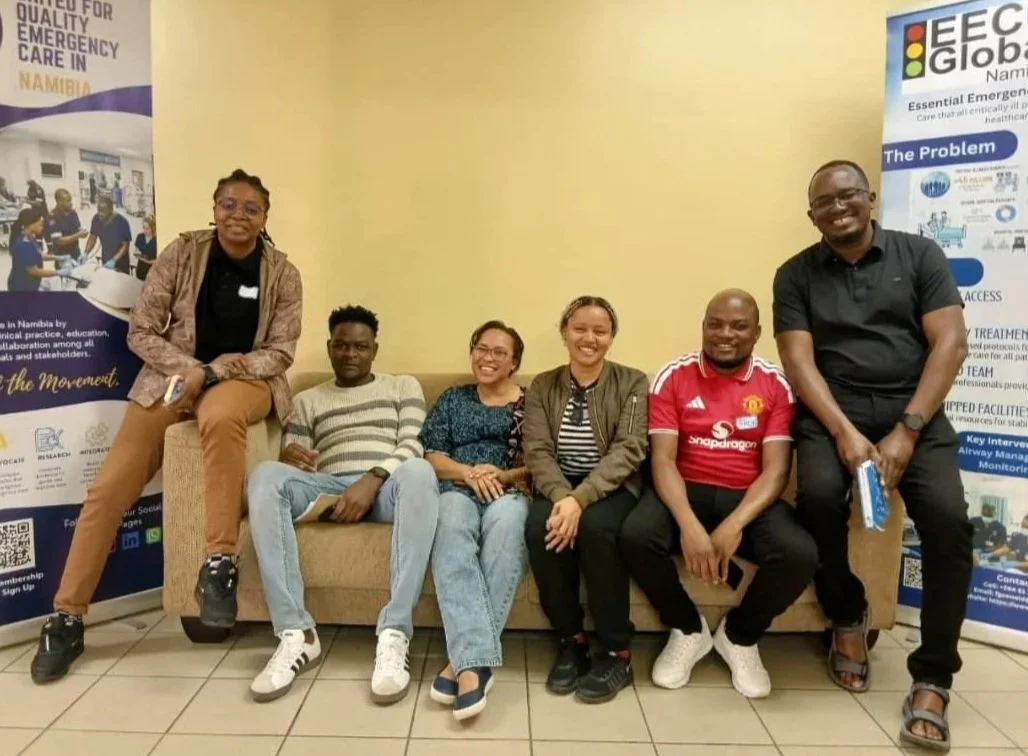
Successful ToT participants
The response to the training has been encouraging. Even experienced healthcare professionals and managers have requested further hands-on practice after completing the online course to strengthen their understanding avoid misinterpretation of the EECC framework.
The experience has also highlighted gaps in application of knowledge & skills, the need for strategic frameworks that involve different professional groups. We need clinical tools that help us address facility readiness, including equipment, clinical supplies and pharmaceuticals, and appropriately trained healthcare workers, alongside evidence-based effective interventions that can be delivered effectively in each setting.
Our next steps include assessing the readiness of the pilot departments and the care currently being delivered, followed by further multidisciplinary training and subsequent implementation of EECC at those departments.
I want to see a hospital where recognising and responding to critical illness is part of routine care in every department, regardless of whether that department has been renovated or equipped with the latest technology.
We should continue improving our facilities. But patients cannot wait for those improvements before receiving essential care.