
Setting the research agenda: The top 10 priorities to advance Essential Emergency and Critical Care
As Essential Emergency and Critical Care (EECC) continues to gain global momentum, an important question emerges: what research do we most urgently need to strengthen EECC and improve outcomes for critically ill patients?
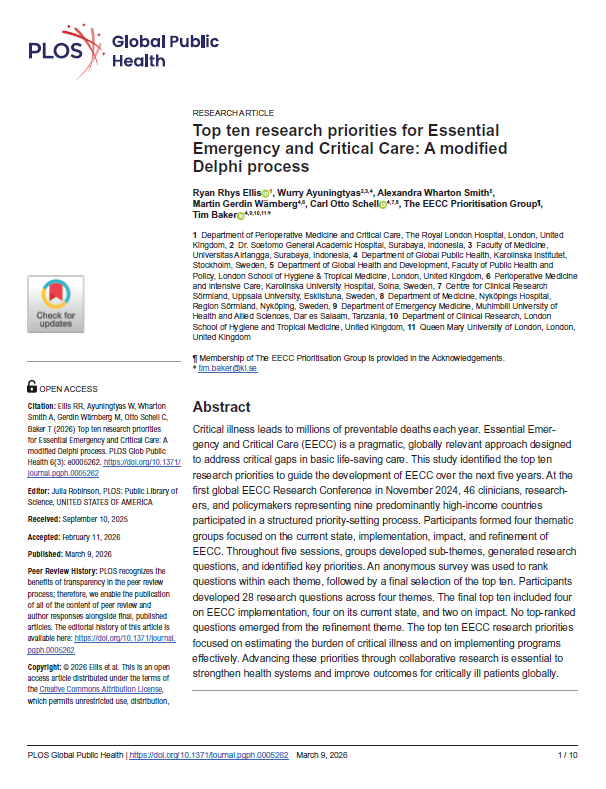
A new study from the EECC Global community has helped answer this question by identifying the top ten research priorities to guide EECC development over the next five years. The priorities were developed during the first global EECC Research Conference, held in Stockholm in November 2024, bringing together 46 clinicians, researchers, and policymakers working in emergency and critical care. You can read the full research here.
Why research priorities matter
Critical illness affects an estimated 45 million adults globally each year and contributes to millions of preventable deaths. Many of these patients never receive even the most basic life-saving care, particularly in low-resource settings where shortages of staff, equipment, and systems limit access to essential treatment.
EECC was developed to address exactly this gap, focusing on simple, effective clinical actions such as oxygen therapy, airway support, IV fluids, and early recognition of deterioration. But for EECC to be successfully implemented at scale, the evidence base must continue to grow.
This new research helps ensure that future EECC studies focus on the questions that matter most.
Four key research themes
Participants developed 28 research questions across four major themes:
Understanding the current state of EECC
Implementing EECC effectively
Measuring the impact of EECC
Refining the EECC approach
Through a structured consensus process, the group identified the ten most important priorities. Most focused on two areas: understanding the burden of critical illness and improving how EECC is implemented in real-world health systems.
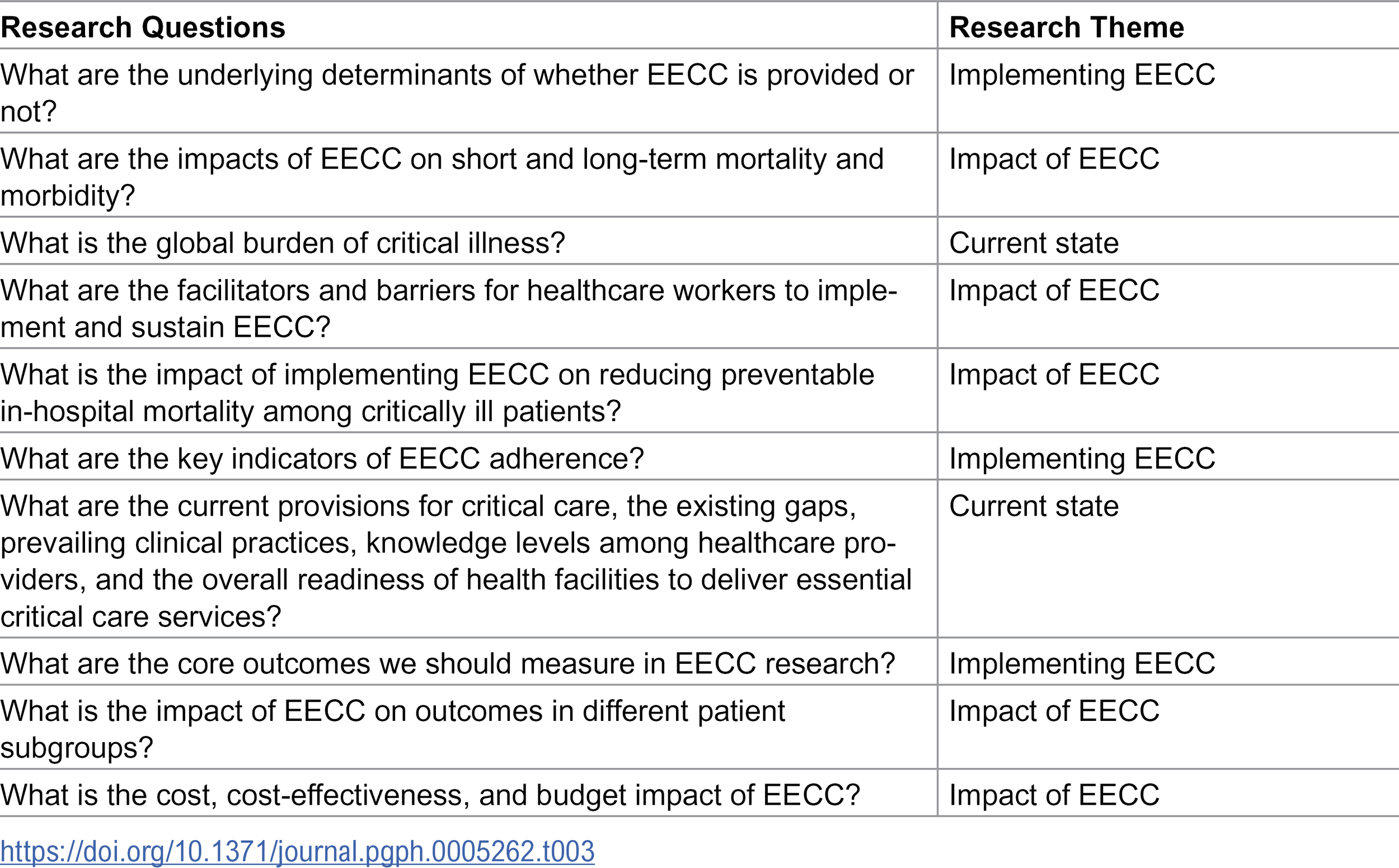
The Top 10 Priority Questions
From knowledge to implementation
Several priority questions focus on practical implementation challenges. These include understanding why EECC is successfully adopted in some settings but not others, identifying barriers to sustainable implementation, and determining which indicators best measure whether EECC is being delivered effectively.
Training also emerged as a key area. Recent EECC training programmes and other initiatives such as WHO Basic Emergency Care courses show promise, but more research is needed to understand how these programmes can be sustainably integrated into health systems and how they affect patient outcomes.
The research also highlights the importance of understanding the impact of EECC. Key questions include how many deaths could be prevented through EECC implementation, how it affects different patient groups, and whether it represents good value for money for health systems.
Building the next phase of EECC
Importantly, the study highlights that EECC research must now move beyond defining the package of care and focus more strongly on delivery, scale-up, and impact. This reflects the evolution of EECC from a clinical consensus toward a health systems intervention.
The next phase will require collaboration between clinicians, researchers, policymakers, funders, and health system leaders. Expanding engagement with nurses, frontline providers, and patient communities will also be essential to ensure research reflects real-world needs.
Looking ahead
Setting research priorities is not just an academic exercise. It is a roadmap for action.
By focusing research efforts on the most important unanswered questions, the EECC community can accelerate progress toward a shared goal: ensuring that every critically ill patient receives the essential care they need, wherever they are treated.
Because ultimately, strengthening EECC research is about more than generating evidence; it is about saving lives.