
When Nine Critically Ill Children Needed Oxygen, Vwawa Was Ready
10-year-old Runia arrived at Vwawa District Hospital, fighting for every breath.
For four days, the young girl from a rural village in Tanzania’s Southern Highlands had been growing weaker. She had a fever, difficulty breathing, and little energy. By the time her family reached the hospital, she was barely conscious.
Her mother, Fane, remembers the fear.
“When my child became very sick and started breathing with difficulty, I was very afraid because the nearest health facility is far from our village”
At the emergency room, staff trained in Essential Emergency and Critical Care (EECC) immediately recognised that Runia was critically ill. Her oxygen levels were dangerously low, she was breathing rapidly, and her fever was high.
Oxygen was started straight away. Intravenous fluids and medicines were given, and she was carefully positioned and monitored while the team worked to stabilise her condition.
Investigations later revealed the cause: severe malaria complicated by fluid in the lungs, a dangerous condition that can make breathing extremely difficult and quickly become fatal without treatment.
What happened next says something important about the changes taking place at Vwawa.
Runia was admitted to a designated bed for critically ill patients in the paediatric ward, where she received continuous oxygen and close observation.
"When Runia arrived, our ward already had about eight patients receiving oxygen," recalls paediatric nurse Ndawala. "However, we were not afraid to receive her because EECC has strengthened our facility's readiness to manage critically ill patients at any time. Oxygen concentrators were readily available, and we immediately started her on oxygen therapy."
Over the next few days, Runia's breathing settled, her oxygen levels returned to normal, her fever disappeared, and her strength slowly returned. Soon she was eating again, talking again, and smiling again.
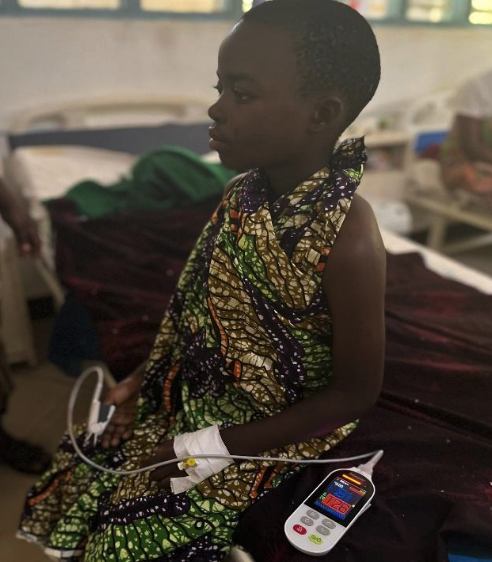
Runia before discharge
A few days later, she was discharged home.
Runia's story is about one child, but it is also about preparedness. Before EECC Runia may not have received oxygen; or another child might’ve been weaned off oxygen in order to give it to Runia.
Severe malaria remains a major cause of illness and death in Tanzania. The difference between life and death often depends on whether a hospital can recognise critical illness quickly and provide essential care immediately.
For Runia, that care was there when she needed it. As EECC continues to expand, more children will have the same chance.