
Assessing Essential Emergency and Critical Care Resources in Addis Ababa - a South to North collaboration
As a medical student from Sweden, last year I had the opportunity to take part in a research project involving Essential Emergency and Critical Care (EECC) in Addis Ababa, Ethiopia.
For my medical studies at Linköping University, all students are required to be part of a research project. I had developed a strong interest in global health after spending a semester as an exchange student in Kenya, and I wanted my research project to include global health.
To make this possible, I searched for suitable projects and was able to come in contact with my supervisor Jonna Idh, Department of Anaesthesiology and Intensive care, Västervik Hospital, Region Kalmar, who is also in the EECC Hub in Sweden. Through her network, I was introduced to Fitsum Kifle, who is associated with the Network for Perioperative and Critical Care (N4PCC) situated in Addis Ababa, Ethiopia. Fitsum has been involved in setting up the first EECC Hub in Ethiopia which has been one of the first steps towards establishing EECC. To finance my travel to Ethiopia I received a grant from SIDA, the Swedish International Development Cooperation Agency, through their program for Minor Field Studies (MFS).
Critical care in Addis Abeba
In Ethiopia, critical care capacity is usually limited, and hospital resources are often stretched thin. In particular , emergency departments are frequently crowded and receive many potentially critically ill patients. Common issues include shortages of trained personnel and lack of available equipment and medications that are vital to providing safe and efficient critical care. Addis Ababa is growing rapidly. It is one of the largest cities in Africa and is also a key diplomatic and commercial hub in Eastern Africa. This rapid growth puts a large strain on the emergency departments within the city, making the provision of timely and effective critical care a challenge.
Why we did this study - The need to understand the local context
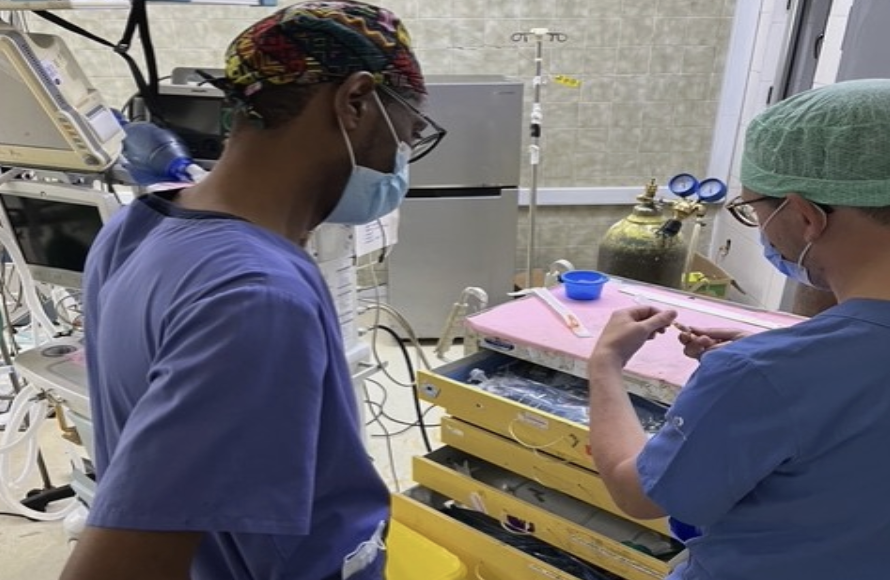
To better understand the challenges that emergency departments in Addis Ababa faces, Fitsum and his team at N4PCC took the initiative to conduct a study that would assess the current level of EECC resources in Addis Ababa. Our study evaluated the availability and readiness of EECC resources in 29 emergency departments across 19 public hospitals. Ethiopia has a three-tiered hospital system, and hospitals from all levels were included, including eight primary, six secondary, and five tertiary hospitals.
How it was done - The EECC Rapid Healthcare Assessment Tool
Using a modified version of the EECC rapid healthcare facility assessment tool, data collectors gathered two categories of information. The assessment tool consists of a list of items selected for their importance in efficient critical care and feasibility for data collection.
Facility-level availability: Assesses access to resources anywhere within a healthcare facility.
Bedside-level readiness: Assesses access to critical care resources for healthcare staff in the immediate vicinity of the patient and bedside.
Items included in the assessment tool can be, for example, access to a suction machine and suction catheters; access to oxygen and supplies for administering oxygen; intravenous cannulas and intravenous fluids or basic medical equipment for monitoring vital signs such as pulse-oximeters or blood pressure monitors.
The findings - all essential resources are not always available
Our findings were that none of the hospitals had full access to all necessary resources to provide essential emergency critical care. Many of the studied resources were usually available at both the facility and bedside levels, but not always. This shows that there is a need for improving access to EECC resources in emergency departments in Addis Ababa and implementing EECC could be a quick and cost-effective way to achieve this.
An invaluable experience
Before my participation in this research project, I had limited knowledge about EECC, though I was aware of the need to improve healthcare in low- and middle-income countries from my previous experiences as a medical student. By participating in this research project, I was able to gain a deeper understanding of EECC and how it can be implemented to improve healthcare in a very cost-effective way. On top of this I was also able to meet a lot of interesting and dedicated people during my time in Addis Ababa, and I am sure many of these people could be useful contacts to have in future collaborations.
I am very grateful for the opportunity to travel to Ethiopia and to be a part of EECC's efforts to improve healthcare globally. Being a part of this South to North collaboration has been a great experience and has led to a lot of both professional and personal growth. My experience highlights the importance of creating more similar opportunities for students as well as other healthcare professionals to take part in international collaborations.
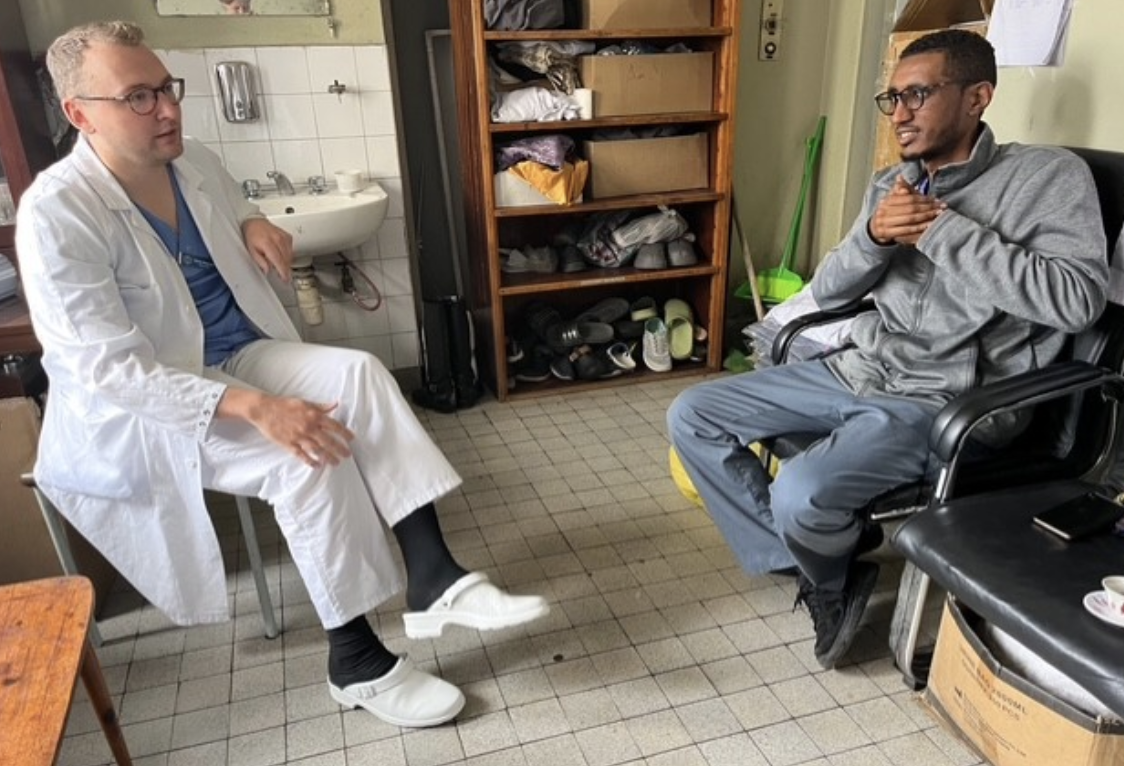
Discussion with Dr. Yonathan Abebe, Cardiothoracic anaesthesiologist during visit at Black lion hospital, Addis Ababa.
Opportunities for research can help grow global engagement
My hope is that we can make it possible for more students or other healthcare professionals to take part in similar projects as I have. By participating in a research project, you not only gain a lot of experience on a personal level, EECC also benefits a lot since knowledge of it is spread globally and participants can establish engagement for it at their home institutions. Through learning from each other, making friends and sharing experiences we can contribute to making EECC available to patients all across the world.