
EECC Coordination Hub established at Yekatit Hospital, Addis Ababa
A major milestone has been reached for Essential Emergency and Critical Care (EECC) in Ethiopia. The country’s first hospital-based EECC Coordination and Learning Hub has now been established at Yekatit 12 Hospital in Addis Ababa by the Ethiopian EECC Hub, under the hospital's leadership, in collaboration with the Ministry of Health and the Network for Perioperative and Critical Care. This marks an important step in moving EECC from data gathering and assessment into coordinated, hospital-wide practice.
EECC focuses on the timely delivery of low-cost, life-saving care for critically ill patients, regardless of diagnosis or where they are located in the hospital. Although the principles are intentionally simple, experience across many countries has shown that implementation often fails when responsibility is fragmented, ward capacity varies, and no single structure exists to coordinate action. The new EECC Coordination and Learning Hub has been designed precisely to address these challenges.
From evidence to coordinated action
The establishment of the hub builds directly on recent EECC leadership work in Addis Ababa, where emergency, ward, and critical care leaders reviewed findings from Ethiopia’s national EECC hospital assessment. Those findings echoed patterns seen in the African Critical Illness Outcomes Study (ACIOS) and in EECC implementation in Tanzania: critically ill patients are common, many life-saving treatments are low-cost and feasible, but systems for early recognition and reliable delivery are often weak.
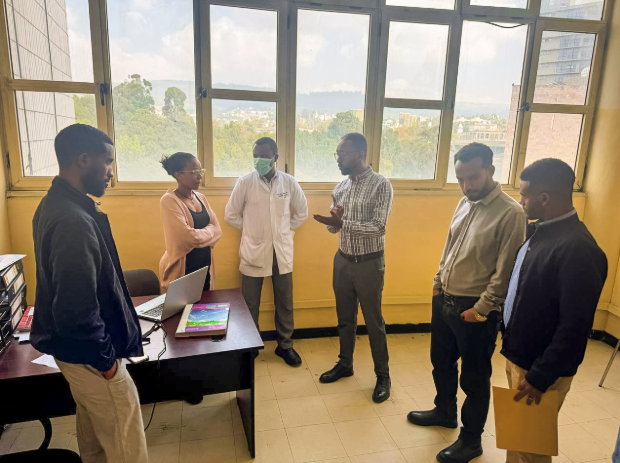
The hub provides a practical mechanism to turn these insights into action. Rather than functioning as a standalone service, it acts as a coordinating and enabling structure, supporting ward teams to deliver EECC as part of routine care across emergency, medical, surgical, paediatric, obstetric, and critical care settings.
What the EECC Coordination and Learning Hub does
The hub has four core functions.
First, coordination and governance. It brings together EECC activities across departments and serves as a clear link between ward teams, hospital leadership, and national EECC structures. By harmonising EECC tools, protocols, and priorities, it helps ensure a consistent approach across the hospital.
Second, clinical support and implementation. A key feature is structured EECC Clinical Support Rounds, led jointly by a senior physician and senior nurse. These rounds are bedside-focused and supportive, reinforcing early recognition of critical illness and essential actions for airway, breathing, and circulation. Over time, EECC checks are integrated into routine ward rounds, led by designated EECC focal persons, with light-touch feedback to the hub to support learning and system improvement.
Third, training and capacity building. The hub coordinates hospital-level EECC training using a training-of-trainers approach, alongside ward-based micro-training and mentoring. This helps build a sustainable cadre of EECC champions across departments, strengthening confidence and capability at the frontline.
Finally, learning, monitoring, and scale-up. Using validated EECC rapid assessment tools, the hub assesses hospital readiness and bedside care provision, tracks simple process indicators, and captures practical lessons. Importantly, the focus is on identifying system gaps. This learning is used to improve care locally and to develop a standardised model that can be adapted by other hospitals.
A model for scale-up and south-to-south learning
The EECC Coordination and Learning Hub at Yekatit Hospital reflects lessons learned from EECC implementation elsewhere, particularly in Tanzania, where hospital assessments, structured training, and strong local champions led to large improvements in EECC coverage and survival. Adapting these strategies to the Ethiopian context demonstrates the value of in-region, south-to-south collaboration, where countries facing similar health system challenges learn directly from one another.
The hub is hosted within the Emergency Department and led by a senior physician and senior nurse with EECC experience, supported by EECC focal persons in each major ward. It reports to hospital clinical leadership and aligns closely with national priorities, ensuring both ownership and sustainability.
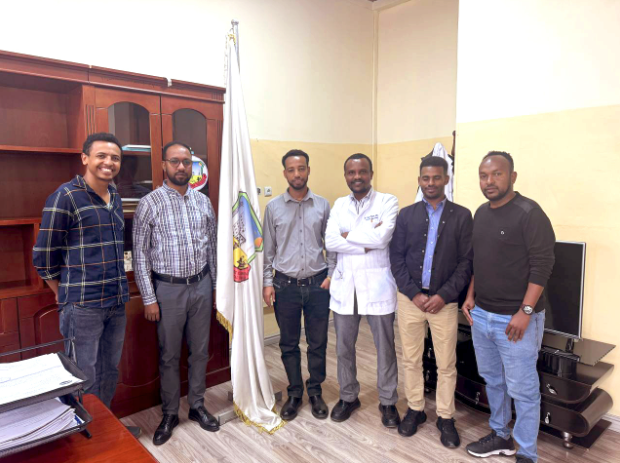
First members of the EECC Coordiantion & Learning Hub
Looking ahead
By improving early recognition and management of critical illness, strengthening coordination between departments, and building frontline capacity, the Yekatit Hospital EECC Coordination and Learning Hub represents a concrete step toward embedding EECC into routine hospital care. It also provides a tested, scalable model for wider adoption across Ethiopia.
As EECC continues to grow across countries and regions, this new hub stands as a potent example of how leadership, coordination, and practical learning can translate simple, evidence-based principles into lives saved.