
EECC in Tanzania Wins Inaugural Lancet Evidence to Impact Award
The Implementing EECC in Tanzania programme has received the inaugural The Lancet–Elsevier Foundation Evidence to Impact Award, recognising outstanding implementation science that translates research into measurable improvements in patient care.
The award recognises the ongoing work by the multidisciplinary team behind the Implementing EECC in Tanzania programme, which has worked with the Government of Tanzania to implement Essential Emergency and Critical Care (EECC) across 79 hospitals. Following implementation, the programme was associated with a 31% reduction in inpatient mortality, while also delivering substantial improvements in the availability of essential care, health worker knowledge and hospital readiness.
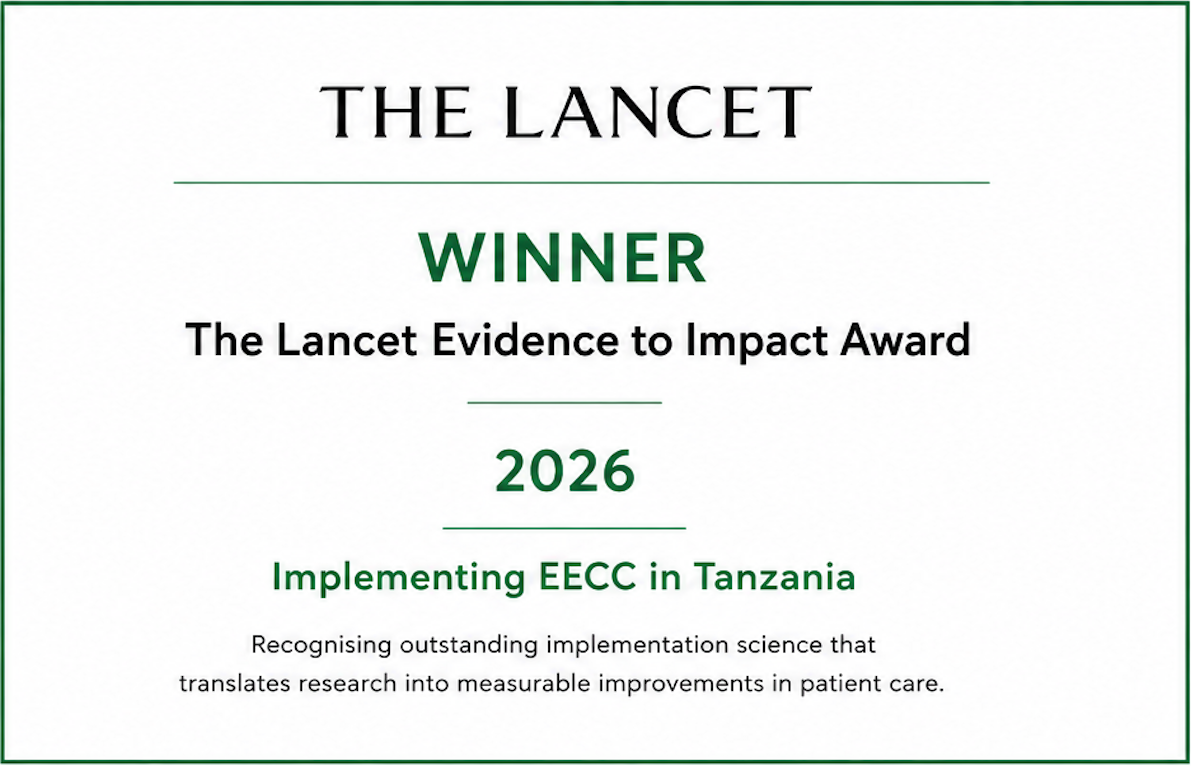
The Lancet–Elsevier Foundation Evidence to Impact Awards were established to recognise research teams that go beyond generating evidence to successfully implementing proven interventions in real-world settings. Rather than recognising research alone, the awards celebrate teams that have successfully translated evidence into better healthcare.
The international scientific jury selected the winning teams based on demonstrated community need, meaningful co-design, clear implementation strategies and outcomes, and long-term sustainability.
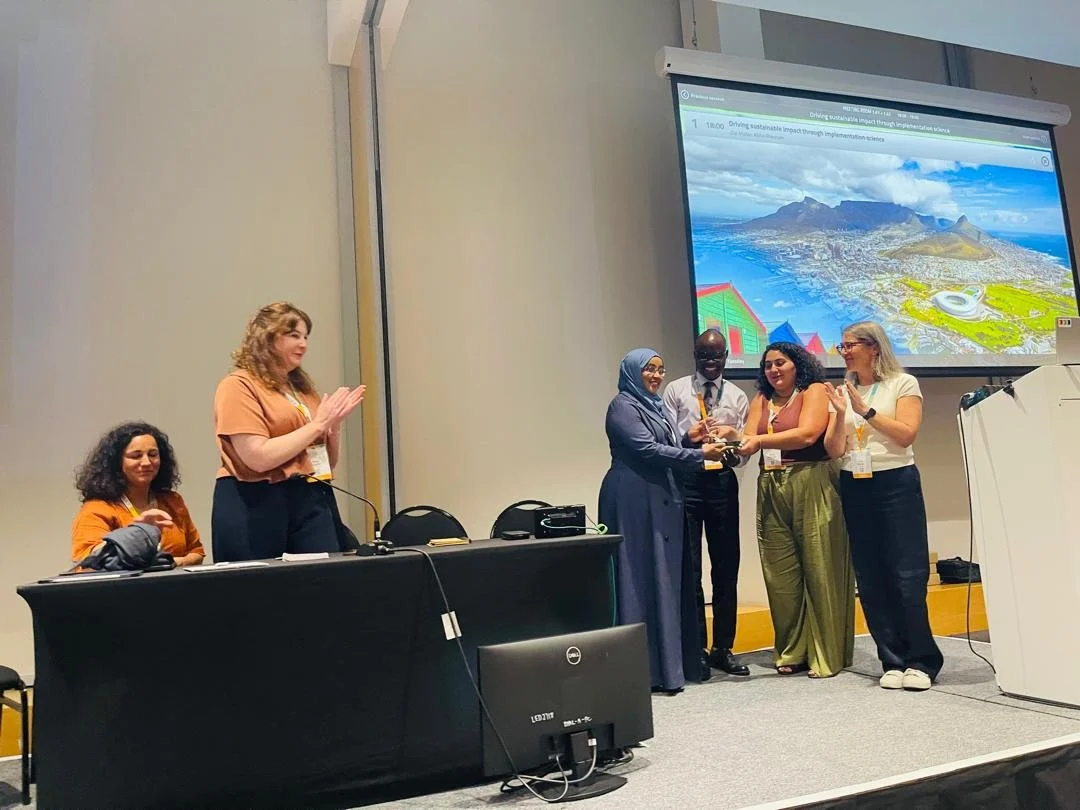
Karima Khalid accepted the inaugural Lancet–Elsevier Foundation Evidence to Impact Award on behalf of the multidisciplinary EECC in Tanzania team at the award ceremony in Cape Town, South Africa.
Since launching in 2025, the Implementing EECC in Tanzania programme has trained more than 1,000 healthcare providers across 79 hospitals in six regions, strengthened the capacity of health system leaders, introduced practical clinical tools and job aids, embedded key EECC indicators into Tanzania's national health information system and supported long-term scale-up. Patient researchers, including survivors of critical illness, have also played an active role in the programme, helping ensure implementation is shaped by the experiences of those receiving care.
“We are honoured to receive the Elsevier Foundation–Lancet Evidence to Impact Award. Our work has demonstrated that it is possible to improve the quality of care given to critically ill patients, including in primary healthcare, using the evidence-based interventions in Essential Emergency and Critical Care.”
”This achievement reflects the commitment of a multidisciplinary team of clinicians, researchers, policymakers and patient representatives who have worked together to implement EECC across Tanzania. The recognition will help us continue generating the evidence needed to sustain these improvements, support further scale-up in Tanzania and inform implementation in other countries.”
The award recognises what has already been achieved in Tanzania, but its significance extends far beyond one country. As health systems around the world seek practical ways to improve outcomes for critically ill patients, Tanzania has demonstrated that strengthening the delivery of simple, evidence-based care can lead to measurable improvements in survival.
The award was presented during a ceremony in Cape Town, South Africa, bringing together the inaugural winners, members of the international jury and editors from The Lancet.
For EECC Global, the award is also recognition of a wider ambition: ensuring that every critically ill patient, in every hospital, receives the essential care they need. Building on the experience in Tanzania, EECC Global is working with governments, hospitals and healthcare professionals to support the implementation of EECC in more countries and help save more lives.
Following the award, The Lancet also published a profile of EECC Global co-founder Dr Tim Baker, exploring the development of Essential Emergency and Critical Care (EECC) and the global challenge of improving care for critically ill patients. Read more.