
From Learning to Leadership: New EECC Champions Step Forward in Tanzania
Every day, patients die not because treatment is unknown, but because basic, life-saving care is missed.
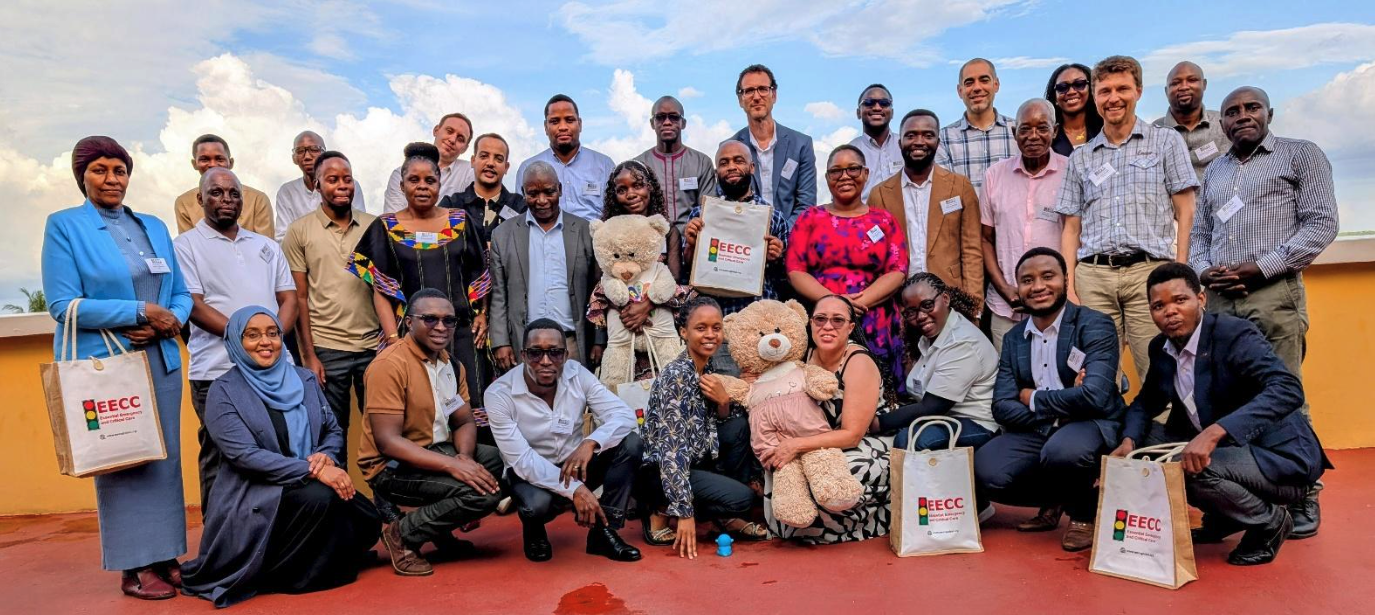
In March 2026, a group of clinicians, nurses, researchers, and health system leaders gathered in Dar es Salaam to change that. The latest Essential Emergency and Critical Care (EECC) Champions Workshop brought together participants from across Tanzania, Kenya, Uganda, Ghana, Rwanda, Zambia, Namibia, the Democratic Republic of Congo, and as far afield as Canada and Chile. Their shared goal was clear: to strengthen how hospitals recognise and respond to critical illness.
The setting mattered. Tanzania has become one of the clearest examples of EECC in action, with implementation across hospitals associated with a 31% reduction in inpatient mortality. For participants, this was not theory, it was proof that strengthening essential care can save lives at scale.
Re-centering care on what matters most
A consistent theme throughout the workshop was a return to fundamentals. As one Dr Rodrigo Lopez reflected:
“We’ve gone to a very technological extreme in medicine. But what saves lives, especially in vulnerable settings, are the basics.”
-
EECC focuses on those basics: early recognition of critical illness through vital signs, timely oxygen therapy, fluid resuscitation, airway support, and clear communication between teams. These are simple, low-cost interventions, but they are often inconsistently delivered, particularly in general wards where most critically ill patients are cared for.
Understanding the gap—and the opportunity
Participants explored this gap through lectures, case discussions, and ward-based scenarios. The emphasis was not just on what to do, but why essential care is so often missed. Drawing on evidence from global research and implementation in Tanzania, sessions unpacked the systemic barriers (limited training, unclear processes, gaps in equipment and organisation) that prevent timely care.
Most critically ill patients are not treated in intensive care units. They are cared for in general wards, where monitoring may be inconsistent and deterioration can go unrecognised. This is where EECC makes a decisive difference: by standardising a core set of clinical processes and ensuring hospitals are equipped and organised to deliver them.
From knowledge to action
Crucially, the workshop moved beyond understanding to action. Through group work and practical exercises, participants developed the skills to advocate for EECC within their own settings, learning how to respond to common misconceptions and make the case for change to colleagues, managers, and policymakers.
The final phase focused on implementation. Each participant developed a tailored action plan to take back to their hospital or health system. These plans were practical and immediate:
introducing vital signs–based triage in general wards
training nurses to initiate oxygen and fluids without delay
embedding EECC protocols into routine workflows
strengthening communication using structured tools such as SBAR
As one participant put it:
“I’m leaving with a clear plan to change how we recognise and treat critically ill patients in my hospital.”
Many participants continued into a Training of Trainers programme, building their ability not only to deliver care, but to teach it, multiplying the impact of EECC across teams and institutions.
Building a global movement
What distinguishes the Champions Workshop is not just the knowledge it shares, but the momentum it creates. Participants leave not simply as learners, but as catalysts, connected to a growing global network working to ensure that essential care is delivered, every time.
The diversity of the group reinforced a central idea: while health systems differ, the problem is universal. Most critically ill patients are treated outside intensive care units. Many do not receive the basic supportive care that could save them. The challenge is not knowing what to do, it is making sure it happens.
Each new EECC Champion returns to their health system with the tools, and the responsibility, to turn simple, life-saving actions into standard practice. Because the goal is straightforward: no patient should die for lack of essential care.