
A Subtle Sign, a Life Saved: EECC in Action for Baby Yusta
“The moment I saw the baby’s tiny fingers turn blue, I knew she was in danger. I didn’t waste a second.”
Baby Yusta entered the world crying strongly. She fed well, her mother smiled with relief, and everything appeared normal after birth at Vwawa District Hospital in Tanzania. But just a few hours later, during a routine transfer to the postnatal ward, that calm happy moment changed.
As part of standard observation, a nurse reassessed both mother and baby. It was then she noticed something subtle but alarming: Yusta’s fingertips and toes were turning blue. When the nurse checked her vital signs, Yusta was alert and her airway was clear, but her oxygen level was dangerously low and she was breathing much faster than normal.
Recognising these danger signs, the nurse acted immediately using Essential Emergency and Critical Care (EECC) principles. Yusta was placed under a warmer to prevent her body temperature from dropping, and oxygen was started through small nasal prongs. A clinician was called to review her condition.
The clinician identified that Yusta was developing respiratory distress, meaning her lungs were struggling to get enough oxygen into her blood. With oxygen and close support, her condition began to change. Within minutes, her oxygen levels rose, the blue colour faded from her fingers and toes, and her breathing gradually slowed.
Yusta was kept under close observation with frequent reassessment. By the next day, her oxygen levels were stable, her breathing was normal, and her hands and feet were warm and pink again. She continued breastfeeding well and no longer needed oxygen. After a full newborn assessment and counselling on warning signs, Yusta was discharged home with her mother.
“I didn’t know what was happening to my baby,” her mother said. “But when the nurse started acting so quickly, I knew something was wrong. I thank the nurse and the other staff for identifying the danger my baby was in. Now I am going home with her.”
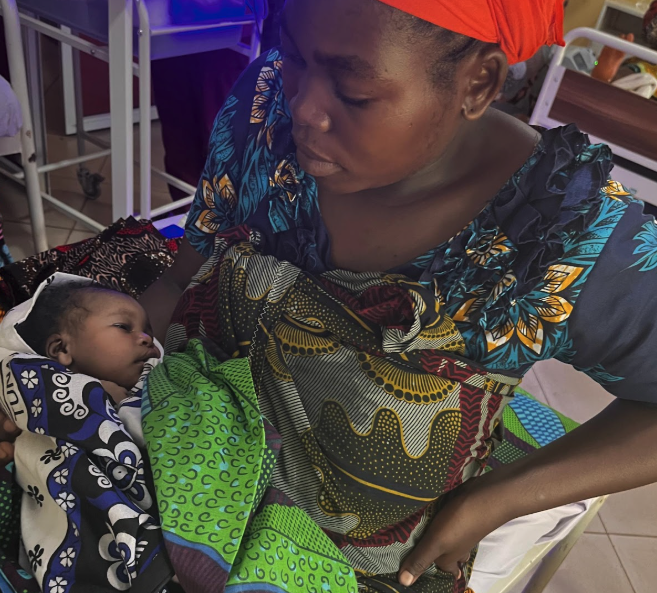
Yusta with her mother, getting ready to go home
Many newborn emergencies begin quietly, with small changes that are easy to miss. Yusta’s story shows how early identification and simple actions like warming, oxygen, and close monitoring can prevent tragedy.
As EECC continues to be embedded across hospitals, more babies like Yusta will be identified in time, treated early, and sent home safely in their mothers’ arms.