
A Fever, Fast Breathing, and a Race Against Time for Baby Clavian
“I was very worried when Clavian started having trouble breathing and refused to feed. When the health workers acted quickly, it gave us hope that our baby would survive.”
For the first two weeks of her life, baby Clavian had been doing well. She fed normally and slept peacefully in her mother’s arms in their village in Tanzania’s Southern Highlands. Then, slowly, something changed. She developed a fever, her breathing became fast and laboured, and she stopped breastfeeding. Alarmed and unsure what to do, her parents rushed her to the district hospital.
At the hospital, Clavian was received by a nurse trained in Essential Emergency and Critical Care (EECC). A rapid assessment showed how serious her condition was. She had a high fever, was breathing very fast, and her oxygen level was critically low. Although her airway was clear she was not getting enough oxygen into her body, a condition that can quickly become life threatening.
The nurse acted immediately. Oxygen was started through a small tube placed gently in Clavian’s nose, and medication was given to bring down her fever. Within a short time, her breathing began to ease. Her oxygen level rose into a safer range, and her temperature started to fall.
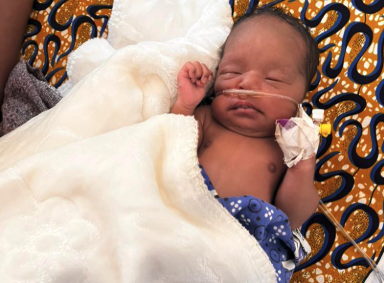
Baby Clavian receiving oxygen
A doctor reviewed Clavian and diagnosed pneumonia, an infection of the lungs that makes breathing difficult and reduces oxygen in the blood. Antibiotics were started straight away, and Clavian was admitted to the paediatric ward. Over the following days, she remained on oxygen and antibiotics while nurses monitored her closely. Gradually, she grew stronger. She began feeding again, her breathing settled, and she no longer needed oxygen support. She was discharged home in a stable condition with oral medication.
“Clavian was critically hypoxic when she arrived,” said the nurse who first assessed her. “Because EECC protocols were followed, we were able to give oxygen immediately and support her until she stabilised. Seeing her recover and go home healthy is very rewarding.”
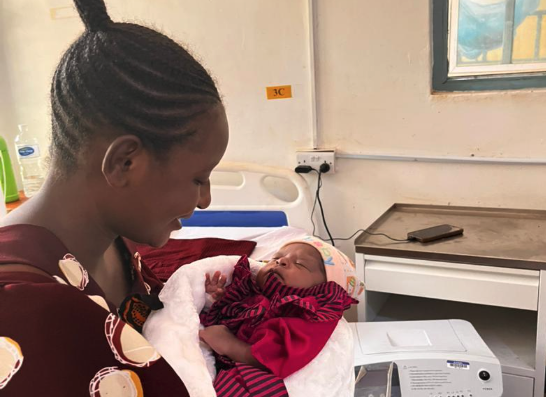
Clavian before dischare
Pneumonia remains one of the leading causes of death in children under five. Clavian’s story shows how early recognition, simple equipment, and timely care can turn a life threatening emergency into a story of survival.
As EECC continues to expand, more newborns like Clavian will receive the care they need in time, giving families the chance to take their babies home healthy and alive.