
“I Don’t Even Recall Who Brought Me Here” – How EECC Helped Loshen Survive Malaria
“I don’t even recall who brought me to the hospital… but I am thankful to everyone who cared for me. The care I received helped save my life.”
When 35-year-old Loshen fell unconscious at home in a small town in Tanzania’s Southern Highlands, his family rushed him to the district hospital. For three days, he had battled fever, joint pain, weakness, and vomiting. On arrival an EECC-trained nurse recognised the danger immediately. By checking his vital signs, she identified that his oxygen levels were dangerously low and his breathing rapid.
Treatment started without delay: oxygen was given through nasal prongs, and intravenous fluids and paracetamol were provided. Within minutes, Loshen’s oxygen levels began to rise, and he slowly opened his eyes.
Investigations confirmed malaria, and treatment began at once. On the ward, he was positioned safely on his side to help keep his airway open, closely monitored, and continued on oxygen. As hours passed, his breathing settled, and by evening, he was awake and weaned off oxygen. The next day, he completed his treatment and was discharged home in good health.
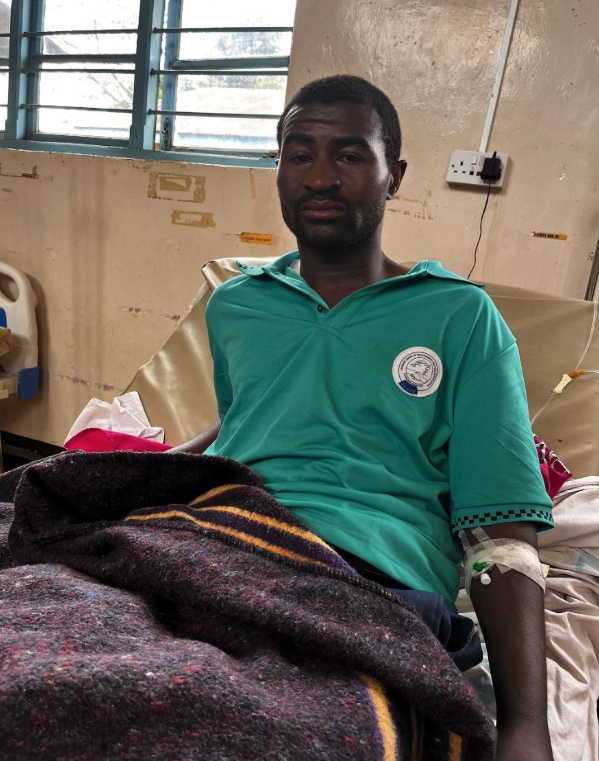
Loshen - recovering quickly
“When Loshen was brought in, he was unconscious and in a critical state,” said the attending nurse. “Thanks to the prompt EECC interventions, including oxygen therapy, positioning, and close monitoring, we were able to stabilize him quickly. Seeing him regain consciousness and recover fully reminds us why timely critical care is so important.”
Malaria remains a leading cause of death in many parts of Tanzania, but Loshen’s story shows what can be achieved when critical illness is recognised early and managed with essential, lifesaving care.
This readiness is possible thanks to the EECC in Tanzania (EECCiT) programme, supported by UNICEF Tanzania and Muhimbili University, and funded through Global Affairs Canada’s CanGive initiative. Their partnership ensures district hospitals are prepared to provide life-saving care for the most vulnerable patients.
EECC equips frontline health workers to act fast in exactly these moments, ensuring that patients like Loshen not only survive but return home to their families.